Restaurant Flatware Replenishment: Count Each Piece Before Reordering
· Yumingxing
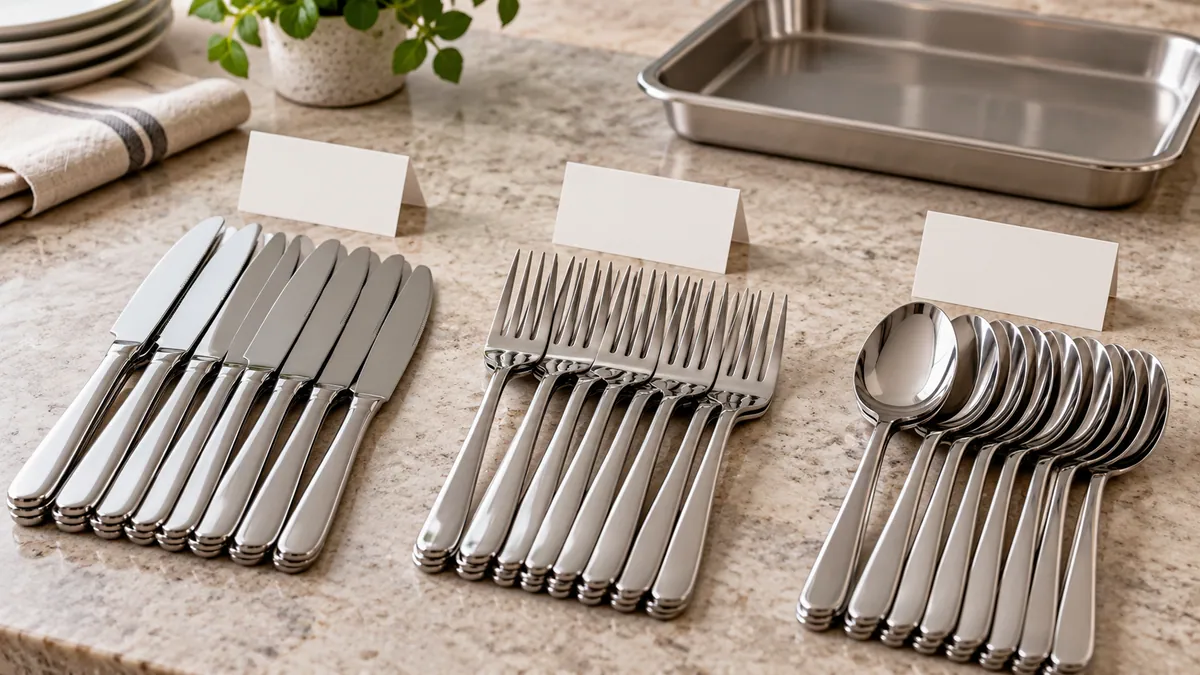
The cover is a generated editorial illustration, not a photograph of a Yumingxing order or a measured restaurant inventory.
Restaurant flatware can be short of forks while there are plenty of knives in storage. Reordering “another hundred sets” may add the wrong pieces. After defining the service assortment, count each component separately and distinguish what is in use, temporarily unavailable for cleaning, damaged or held as reserve. This is an operations worksheet for a buyer, not a prescribed stocking ratio.
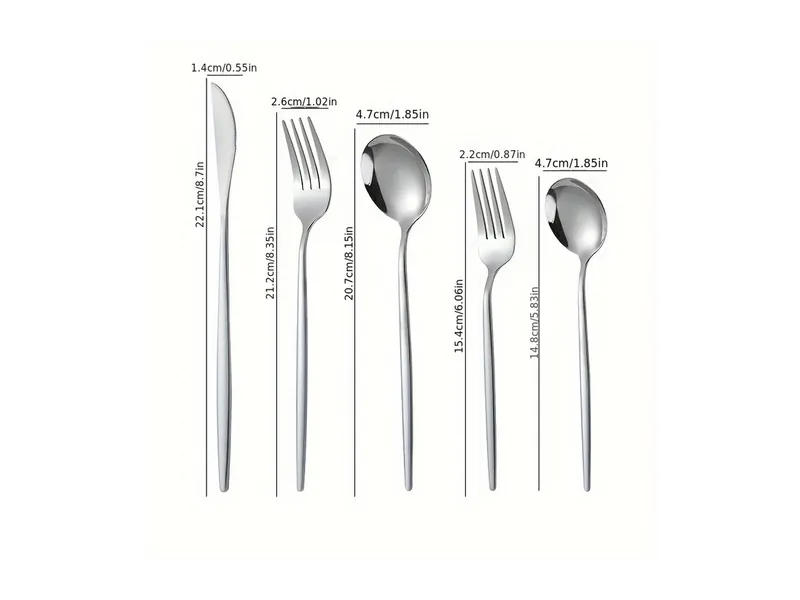
Yumingxing’s hotel and restaurant page covers hospitality sourcing, and its Portuguese-style five-piece catalogue model gives named knife, fork and spoon components for an enquiry. Neither page states that individual pieces can be ordered separately or sets have a fixed restaurant par level. Confirm the supplier’s unit of sale for the chosen model.
Build one count row per utensil and service area
Begin with the service assortment worksheet to establish which pieces a guest actually needs. Then collect a recent busy-service count from the dining team. Keep breakfast, all-day dining and events separate where their patterns differ.
| Count field | What to measure or decide |
|---|---|
| Peak simultaneous use | Number of this component needed at the same time in the service area. |
| Temporarily unavailable | Pieces in collection, washing or movement while the next setting is prepared. |
| Chosen reserve | A buyer-approved buffer for expected disruption; explain its basis. |
| Usable physical stock | Count this component across service, wash and storage; exclude damaged or missing pieces. |
| Confirmed incoming | Pieces already ordered that will be usable before the required date. |
The fields must be measured from the venue’s own operation. Do not apply the same multiplier to every knife, fork and spoon simply because they share a pattern.
Calculate the gap without hiding assumptions
For each component, use:
target pieces = peak simultaneous use + temporarily unavailable + chosen reserve
reorder gap = max(0, target pieces − usable physical stock − confirmed incoming before the required date)
This is an editorial planning formula. In a hypothetical example, a venue estimates 120 dinner forks needed at peak, 60 unavailable during turnaround and a chosen reserve of 20. The target is 200 forks. If it physically owns 150 usable forks, with none confirmed incoming, the planning gap is 50 forks. These numbers are not Yumingxing packing data or a recommended ratio. Count an item in only one category at a time; otherwise the target is inflated.
Convert the gap into a supplier enquiry
Ask whether the matching fork is sold separately or only within a set, and whether the current pattern and finish are still available. If only sets are offered, the buyer must decide whether the extra knives and spoons are useful; do not quietly change a 50-fork requirement into 50 five-piece sets. The pieces, sets and cartons guide explains how to reconcile the eventual order unit after that decision.
Send the model or reference sample, component-level gap, destination and required date through the enquiry page. Request written confirmation of availability, MOQ, packing and lead time. Revisit the worksheet when service demand, wash turnaround or loss changes; a one-time count should not become a permanent assumption.
Sources and limits
- Yumingxing hotel and restaurant cutlery page — hospitality sourcing context; checked 2026-10-01.
- Portuguese-style five-piece catalogue model — component names only; checked 2026-10-01.
The formula and example are editorial tools. They do not establish stock ratios, individual-piece availability, cost or delivery for a real order.