Restaurant Cutlery Assortment: Build the Service List Before the RFQ
· Yumingxing
The cover is a generated editorial illustration, not a photograph of a Yumingxing SKU or an actual restaurant order.
For a restaurant opening or a hotel dining refresh, “five-piece cutlery set” is not yet a service specification. The menu, table setting and replacement practice determine which knife, fork and spoon types matter. Decide the component list for each service before asking suppliers to price a set. This worksheet helps a hospitality buyer define that list; it does not prescribe a universal place setting.
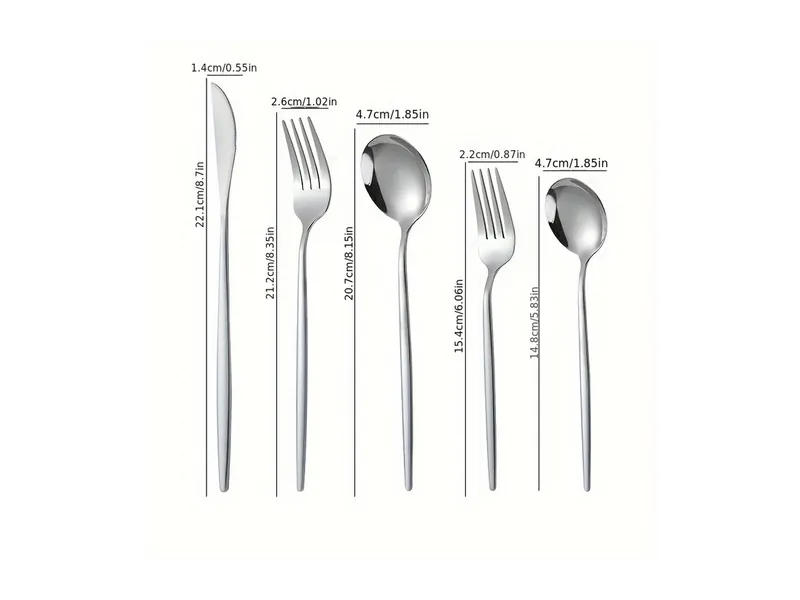
Yumingxing lists hospitality among its cutlery markets on the hotel and restaurant page. Its Portuguese-style five-piece catalogue set identifies a dinner knife, dinner fork, dinner spoon, salad/dessert fork and dessert spoon. These five named pieces are a reference for discussion, not proof that every venue needs all five or that each can be purchased separately.
Map the meal, then choose the pieces
Start with an actual menu and an example cover for each distinct service, such as breakfast, all-day dining or a banquet. A utensil is in the base list only if guests are expected to use it in that service. Keep a separate column for optional courses and replacement stock.
| Service decision | Buyer question | Record on the assortment sheet |
|---|---|---|
| Main course | Which knife, fork and spoon are actually placed or requested? | Exact component names and reference model. |
| Starter or salad | Is a smaller fork needed for the planned menu? | Required, optional or excluded by service. |
| Dessert or beverage | Is a smaller spoon part of the table setting? | Component and when it is issued. |
| Shared pattern | Should the same appearance serve several dining areas? | Which components and finish must match. |
| Replenishment | Can a damaged or missing piece be replaced without a whole set? | Ask the supplier about component availability and order unit. |
The table is an editorial planning method. It is not a recommendation to use a particular number of utensils per guest, and it does not establish any supplier’s spare-part availability.
Separate the guest setting from the purchasing unit
One guest setting is a service definition; one sellable set is a supplier or retail unit. They may differ. If a breakfast service uses one spoon and one fork, do not request “one five-piece set per cover” without checking whether the other three pieces are needed elsewhere. Conversely, a catalogue five-piece set may omit a utensil required by a particular menu. Add a row for each extra item and ask whether it is available in the same pattern.
Once the service list is fixed, make a quantity sheet by component and location. The separate pieces, sets and cartons guide helps reconcile the eventual order units; it should not decide the menu or the component mix for you. Record what is ordered as complete sets and what, if available, is ordered as individual replacements.
Send a decision-ready brief
For each dining area, send the supplier the menu/service type, a reference model, the exact component list, finish, expected quantity by component, destination and target date. Ask for written confirmation of component availability, material and finish by piece, sample route, order unit, MOQ, packing and lead time. Do not infer an MOQ or lead time from the catalogue photograph.
Use the enquiry page to share the brief. If a proposed substitute changes shape, finish or component count, revise the assortment sheet and approve the replacement explicitly before pricing or bulk order sign-off.
Sources and limits
- Yumingxing hotel and restaurant cutlery page — hospitality sourcing context; checked 2026-09-30.
- Portuguese-style five-piece catalogue set — names of five reference components; checked 2026-09-30.
Availability of individual pieces, material, finish, MOQ and delivery are project-specific and require supplier confirmation. The worksheet is not a food-contact compliance or performance claim.