Can New Cutlery Match an Existing Hotel Pattern? A Replacement Decision Record
· Yumingxing

The cover is a generated editorial comparison, not an installed hotel collection or a Yumingxing product-match claim.
A hotel may need more dinner forks while keeping its existing table setting. A similar online photograph is not enough to decide whether a new piece will sit comfortably beside older cutlery. The buyer first needs to choose among exact continuation, approved compatible substitute or a planned change of pattern. This is a replacement decision, distinct from building the initial service assortment.
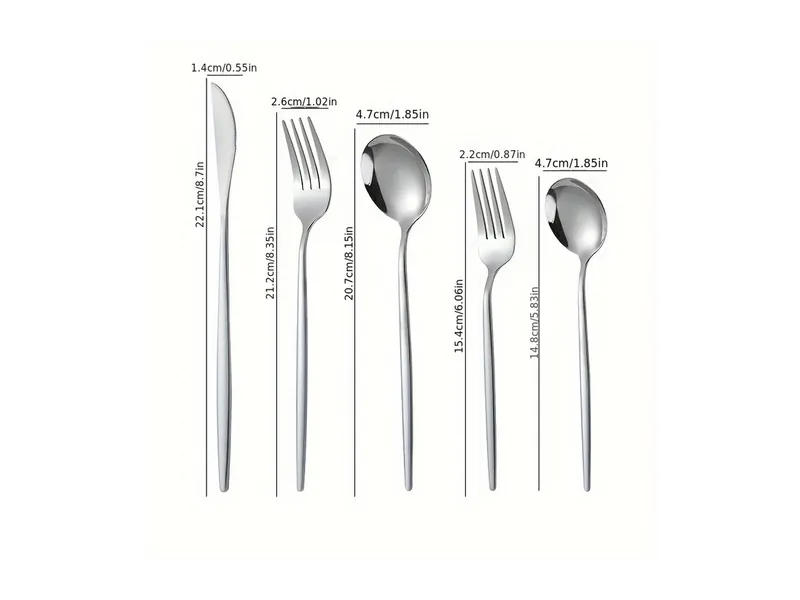
Yumingxing presents cutlery for hospitality buyers on its hotel and restaurant page and lists a Portuguese-style five-piece catalogue pattern. Those pages do not establish that a buyer’s installed pattern is still made, that it matches this catalogue model, or that individual replacements are available. Ask the supplier to check against an actual reference.
Capture the installed piece
Select a clean, representative knife, fork or spoon from the current service and record its known supplier or model, purchase revision and component name. Photograph both faces and the handle from consistent angles, but retain a physical piece if possible. Record the dimensions and finish that matter to visible matching. Do not treat wear on an old piece as the intended new-production finish.
| Comparison point | Buyer record |
|---|---|
| Component and model | Exact piece needed, old order or model ID, and proposed replacement ID. |
| Geometry | Handle outline, length, bowl or tine shape, and any noticeable profile difference. |
| Appearance | Finish, colour treatment and logo position on both sides. |
| Set context | Which other pieces will be laid beside it and in which dining area. |
| Supply route | Same model/revision, proposed substitute, or new-pattern project; ask what is actually available. |
| Decision | Approved as a match, approved for separate use, revise sample, or no approval. |
These are editorial comparison fields, not tolerances or proof that an exact match is technically possible. If the supplier proposes a substitute, compare physical samples side by side under the venue’s typical lighting. A replacement may work in a separate dining room yet look inconsistent when mixed at one table; record the intended use rather than saying only “approved.”
Decide how to buy
If the original model and revision can be confirmed and supplied, request the component-level specification and sample before reordering. If only a near match is offered, document visible differences and obtain the venue’s approval for the exact use area. If neither route meets the brief, treat the change as a planned new pattern, with its own component list and sample sign-off. Never describe a substitute as the original model without evidence.
Once the pattern decision is made, use the existing sample approval guide to retain the accepted physical reference and unresolved changes. Send the old reference, proposed quantity by component, venue and destination via the enquiry page. Ask for written confirmation of model availability, unit of sale, MOQ, sample timing and delivery.
Sources and limits
- Yumingxing hotel and restaurant cutlery page — hospitality sourcing context; checked 2026-09-30.
- Portuguese-style five-piece catalogue model — a current reference pattern, not an asserted match to installed stock; checked 2026-09-30.
The decision record is an editorial buyer tool. Exact availability, equivalence, material, pricing and lead time require supplier and buyer confirmation for the actual project.