Cutlery Sample Approval: What to Record Before Bulk Production
· Yumingxing
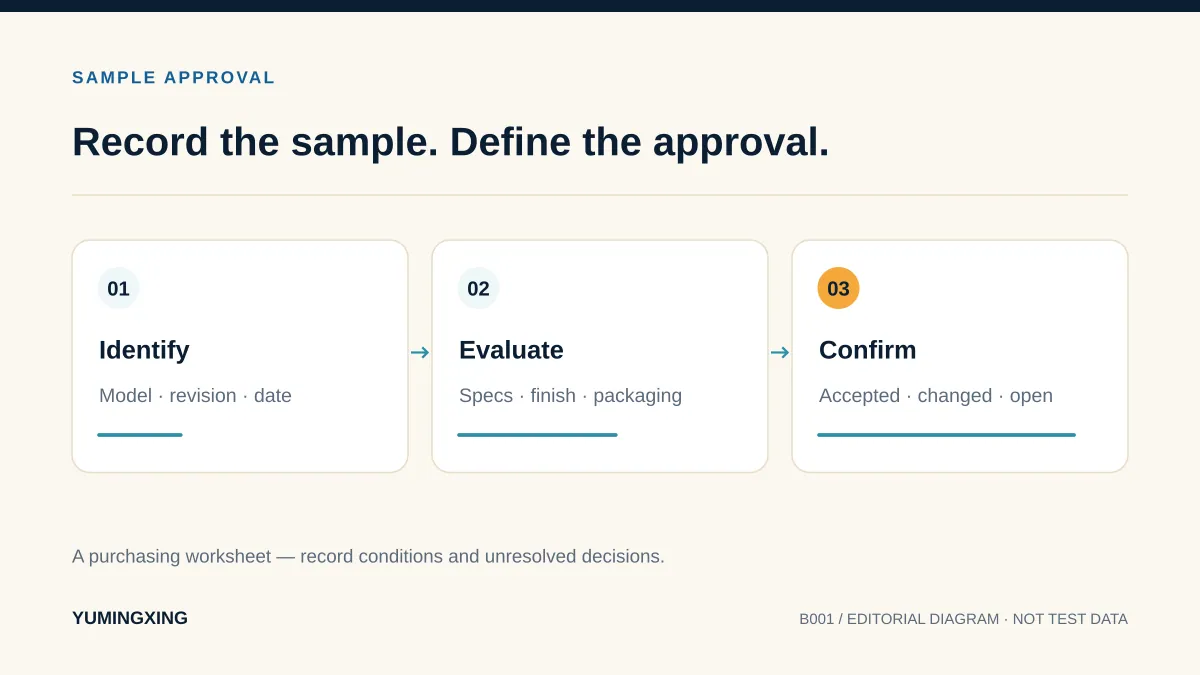
A useful cutlery sample approval identifies the exact sample and records what the buyer accepts, what needs changing and what remains open. Keep the physical reference, written specifications and approval message aligned. A photograph or a message saying “looks good” may leave the material, component weight, finish, logo or packaging undecided.
This guide offers an editorial worksheet for importers, private-label teams and hospitality buyers. It is a suggested purchasing method, not an inspection standard or a record of a completed Yumingxing test.
What exactly are you approving?
First distinguish a showroom sample from the version intended for your order. Ask whether it represents the requested material, construction, surface treatment, logo and packaging. If a stock sample only demonstrates the shape, write that limitation down.
Give the approval record an order reference, model, sample revision and date. Photograph the sample alongside its identification card. For a set, list each component separately: a dinner knife, dinner fork and teaspoon should not be treated as one interchangeable specification.
Use one record for these eight decisions
| Decision | What to record | What to leave open if unconfirmed |
|---|---|---|
| Sample identity | Model, revision, date and reference photos | Whether this version represents production |
| Set composition | Names and quantities of individual pieces | Alternative or missing components |
| Material | Declared grade for each component and document reference | Any component not covered by the document |
| Dimensions and weight | Unit, measuring method, agreed target and tolerance | A value inferred only from photographs |
| Finish and appearance | Approved physical reference and viewing conditions | A different color or surface treatment |
| Workmanship | Observations on edges, tines, joints and visible marks | The agreed production acceptance criteria |
| Logo | Artwork version, position, size and marking method | Placement that has only been mocked up |
| Packaging | Approved configuration, artwork and protective arrangement | The final packed sample and shipment checks |
If a feature matters to acceptance, agree how it will be checked. “Heavy,” “premium” and “smooth” can describe an impression, but do not replace a measurable requirement or an agreed physical reference.
How should you record changes?
Separate three outcomes: accepted as shown, change required, and not yet evaluated. A sample may have an accepted shape while its logo placement still needs revision. Avoid approving the entire product when the decision covers only one feature.
Use a short change log:
| Revision | Requested change | Evidence needed before closing |
|---|---|---|
| Example A → B | Move the logo to the agreed position | New marked sample or agreed verification record |
| Example B → C | Change the retail-box layout | Updated artwork and packed sample |
These rows illustrate a record format; they do not describe an actual order. Link each change to the approved artwork or specification file so that an older attachment cannot quietly become the production reference.
Keep a physical reference and a written boundary
Agree who retains the approved sample and how it is identified. When buyer and supplier keep separate references, record which versions correspond. Ask how a later replacement reference would be approved.
The written approval should state its scope. For example: “Revision C is approved for shape and logo placement. Packaging remains pending.” Use wording that reflects the actual agreement rather than treating this example as a contractual clause.
Sample approval establishes a reference for the order. It does not demonstrate that every production piece matches it, replace the agreed inspection process, or establish food-contact compliance. Ask separately which product documents and production checks apply; the quality and document page provides a useful starting point for that discussion.
A copy-ready approval note
Project and model:
Sample revision and date:
Components included:
Accepted features:
Changes still required:
Documents or checks still pending:
Reference files and retained-sample location:
Person making the decision and decision date:
Common questions
Is approving a photograph enough?
A photograph can record appearance or placement, but it cannot establish weight, material identity or every physical feature. Specify which decision the photograph supports and which checks still require a sample or document.
Should packaging be approved with the cutlery?
Record it in the same project, but allow separate approvals. A product sample and a packed retail unit answer different questions. Keep both versions traceable before confirming the order configuration.
Can the approved sample change later?
It can if the parties agree to a revision. Record the change, create a new identifiable reference and state what earlier approval it replaces.
For a new project, use the OEM/ODM brief to discuss the model, intended changes and the sample route before requesting approval.