Dinner Spoon or Dessert Spoon? Check the Bowl Against the Service
· Yumingxing
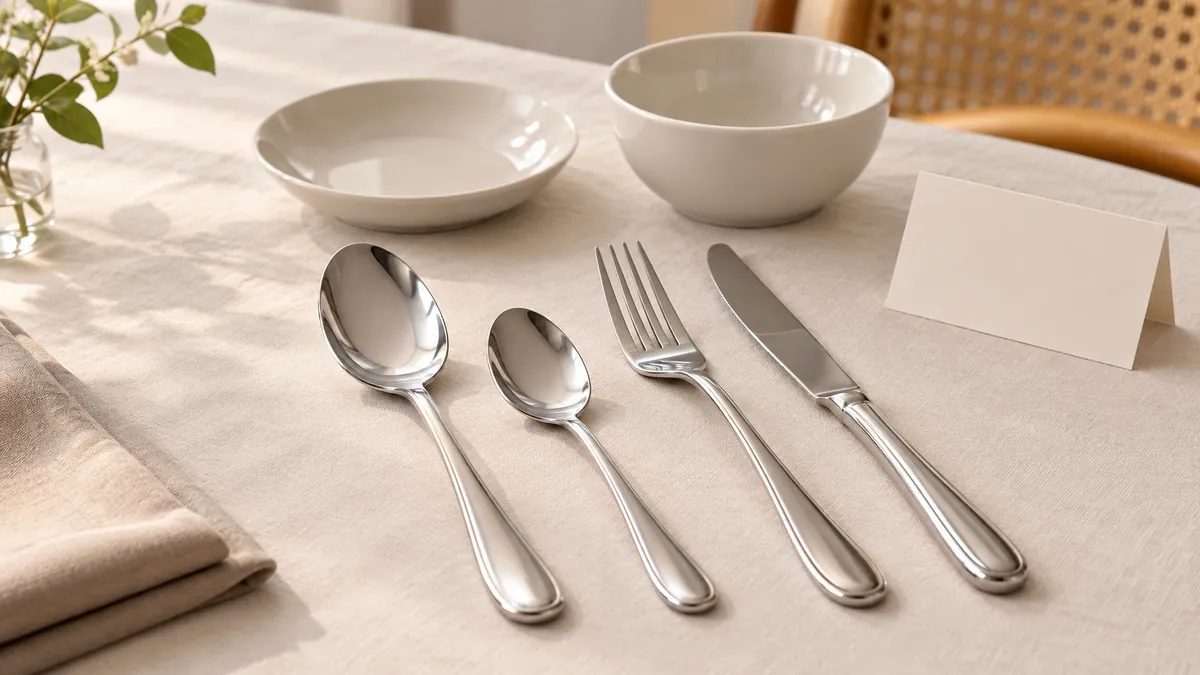
The cover is a generated editorial illustration, not a measured Yumingxing spoon or an approved restaurant sample.
“Dinner spoon” and “dessert spoon” are useful catalogue names, but the name alone does not show how a spoon will work with a buyer’s bowl, menu or serving routine. Before approving a bulk cutlery specification, compare the actual spoon sample with the intended service. Length and bowl width are inputs; they are not a substitute for checking bowl depth, usable scoop and handling in context.
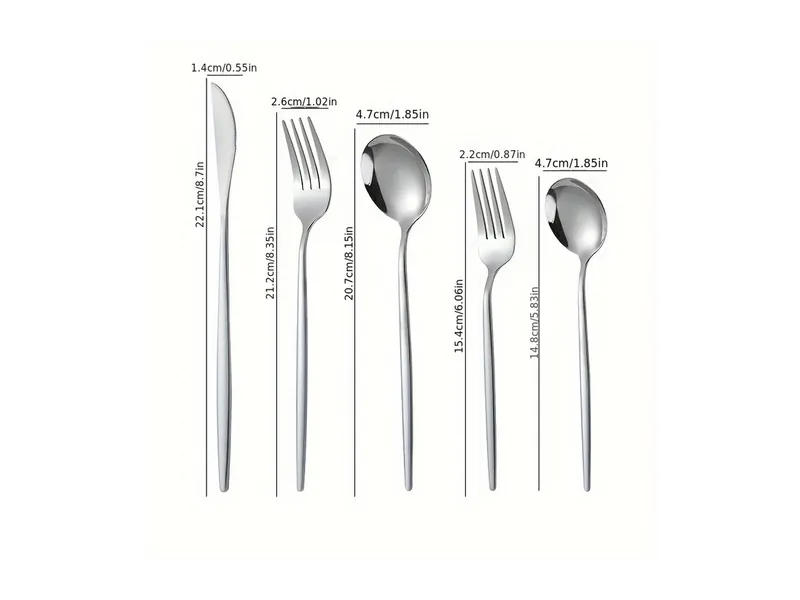
Yumingxing’s Portuguese-style five-piece catalogue set distinguishes a dinner spoon from a dessert spoon. Its RFQ guide advises buyers to state component dimensions or weight requirements when they matter. These pages identify options for an enquiry; they do not establish a measured bowl capacity, suitability for a particular dish, or the specification of an unconfirmed order.
Give the supplier a service-based sample card
| Field | Buyer should record | Check with the physical sample |
|---|---|---|
| Intended use | Soup, dessert or another named menu task; service vessel reference | Try the spoon with the real dishware and serving motion |
| Spoon identity | Model, dinner/dessert designation and sample revision | Keep both sample and quotation tied to one version |
| Head geometry | Bowl outline, depth, rim and usable fill reference | Compare perceived scoop and contact with the vessel |
| Handle | Overall length, grip area and clearance above the vessel | Observe handling by the intended service team |
| Quantity unit | Loose spoon or part of a defined set; count per pack | Avoid pricing one piece as if it were one set |
| Finish and care | Component-specific finish and cleaning expectation | Ask for evidence before making a performance claim |
| Decision | Accept, revise or compare another sample; reviewer and date | Store the accepted sample or controlled drawing |
If a volume figure is useful, agree on a repeatable fill level and measurement method first, then measure the sample. Do not infer volume from length or width alone, and do not publish a capacity figure from an illustrative photograph. A trial should compare the spoon with the buyer’s actual bowl or cup; a physically larger spoon is not automatically better for every service.
Release the component specification, not only the set name
Write the accepted spoon’s drawing or sample reference into the purchase brief along with its component count, finish and pack. If the menu, dishware or spoon shape changes, reopen the approval. The restaurant assortment guide helps determine which utensil categories are needed; this card resolves the narrower question of which spoon geometry fits the chosen task. No Yumingxing spoon capacity, material grade, ergonomic outcome or menu suitability is asserted here without project-specific evidence.