Before a Cutlery Listing Goes Live: Match the Page to the Approved Set
· Yumingxing
The cover is a generated editorial illustration, not a Yumingxing SKU or a live retailer listing.
A retail page can describe “five-piece stainless-steel cutlery” while its images, title and specifications imply a different sellable unit. Before a private-label listing is published, compare every visible statement with the approved order configuration and pack. This is a buyer’s content proof, not a claim that a particular platform has approved the listing or that a product meets a market’s labelling rules.
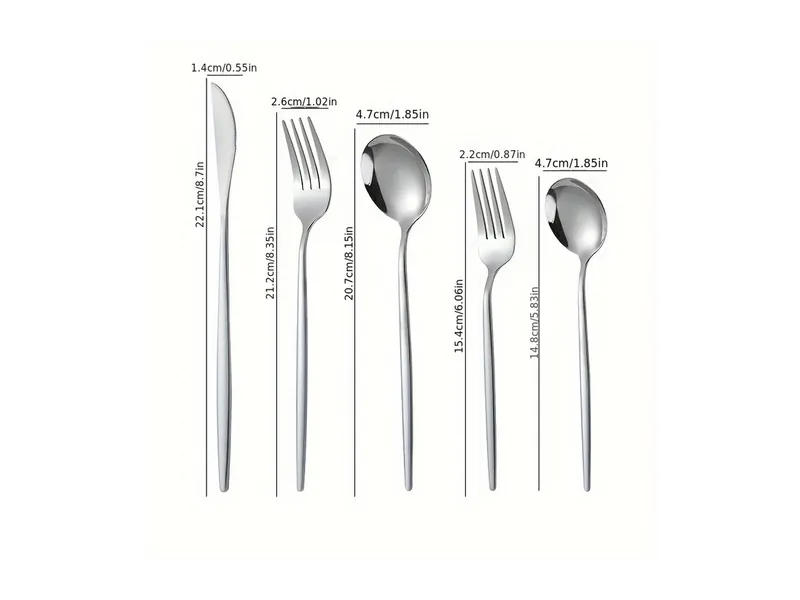
Yumingxing’s Portuguese-style five-piece catalogue page identifies five utensil types and lists material options; it asks buyers to confirm the actual component specification and packaging. The RFQ guide likewise separates pieces, quantities, finish and pack. A catalogue option should not be pasted into a listing as though every option were present in the ordered set.
Proof the sellable unit, not just the headline
| Listing element | Compare with the approved record |
|---|---|
| Product title and variant name | Exact model or buyer SKU, finish, colour and number of sellable units. |
| Piece count | Names and counts of knives, forks and spoons inside one retail unit. |
| Material and finish | The confirmed specification for each component; avoid one blanket grade where pieces differ. |
| Images | Approved sample and pack revision, including which accessories are actually included. |
| Dimensions and weight | Confirmed measurements and whether the number describes one piece, one set or a packed unit. |
| Pack and care text | Approved retail-box version and product-specific care wording; leave unsupported claims out. |
| Owner and version | Person approving the page, source file revision and date of approval. |
Mark each line matched, needs correction, or unverified. If a photo shows more pieces than the sellable unit contains, change the image or clearly identify the image’s role before the listing goes live. Do not borrow material, care or testing language from another SKU. Keep the final page screenshot and the source specification together so later listing edits can be traced to an approved revision.
The component specification card helps verify each utensil; the retail-box and carton brief clarifies what the consumer receives. Send uncertain fields to the supplier through the enquiry page and resolve them before publishing a product claim. A qualified local reviewer should check destination-specific listing obligations; this article gives no legal clearance.
Sources and limits
- Yumingxing Portuguese-style five-piece catalogue page — named components and model-specific options; checked 2026-10-02.
- What to Include in a Cutlery RFQ — component, finish and packaging inputs; checked 2026-10-02.
The proof card is an editorial method. No platform approval, specific product compliance, test result or actual customer listing is asserted.