One Set, Several Specifications: A Cutlery Component Card for Buyers
· Yumingxing
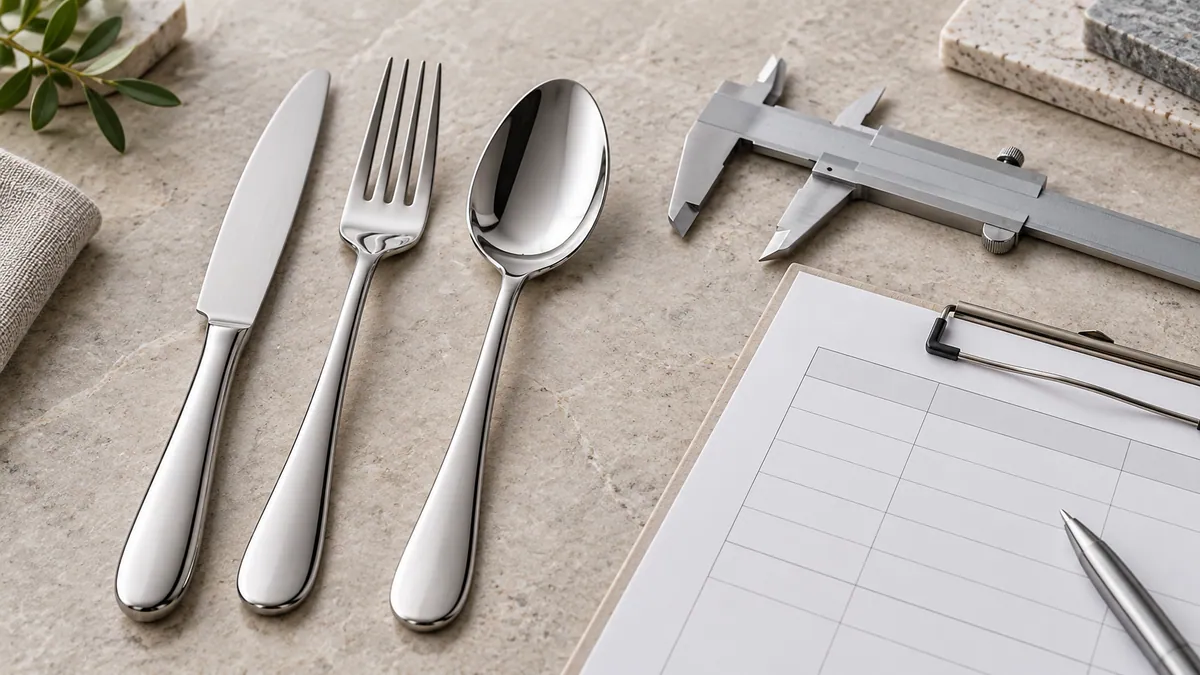
The cover is a generated editorial illustration, not a Yumingxing inspection, measurement record or photograph of a specific SKU.
A set name is not a component specification. “Stainless-steel five-piece cutlery” can leave the knife, forks and spoons described only by a shared headline, even when a buyer needs to approve each piece separately. Before comparing samples or signing a purchase order, use one row per utensil and ask the supplier to fill every field that matters to the project.
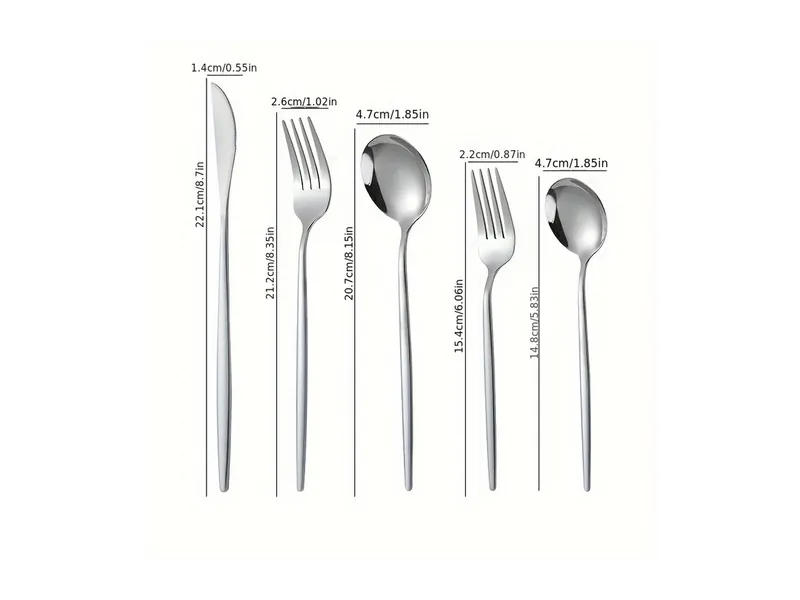
Yumingxing’s current English homepage asks buyers to confirm material and dimensions for each component. Its Portuguese-style five-piece catalogue model identifies a dinner knife, dinner fork, dinner spoon, salad/dessert fork and dessert spoon, while listing material options. That product page is a starting reference; it does not automatically assign one steel grade to every piece in a proposed order. The earlier material guide helps formulate an RFQ. This card is the returned specification record against which to compare the quotation, sample and order.
Make the set auditable by component
| Field for each row | Buyer action before approval |
|---|---|
| Model and component name | Identify the exact knife, fork or spoon and its revision. |
| Proposed material | Ask for the specified grade or construction of that component; do not copy a range of options into an order as if it were one choice. |
| Key dimensions and weight, if relevant | Record the agreed values and tolerances or an approved reference sample. |
| Finish and handle details | Note which surfaces and treatment apply to this piece. |
| Set quantity | State how many of this piece are in one sellable set. |
| Supporting document or sample ID | Link the evidence to the exact product, component and destination requirement. |
| Open issue and approver | Keep an unresolved material or dimension question visible. |
This is an editorial template, not a claim about Yumingxing’s current production values. A blank field means “not confirmed,” not “same as the dinner fork.” If a knife uses more than one constructed part, ask how each part is specified. Do not infer material identity, food-contact suitability or regulatory compliance from appearance or a consumer-facing name.
Reconcile three versions before placing the order
Compare the supplier’s completed card with (1) the quotation, (2) the physical sample or approved drawing, and (3) the draft purchase order. Mark any difference by row. A change to only the dinner spoon’s finish should not silently change the entire set description; a new sample should carry a new revision. Ask the supplier to confirm which document is current and who approved it.
Use the quality and documents page as a reminder to request documents that match the product and destination. The necessary evidence depends on the actual market and product; this article does not prescribe a particular certificate or test. Once the component card is agreed, the sample approval guide explains how to retain the accepted reference. Send the model and the blank card through the enquiry page for supplier completion.
Sources and limits
- Yumingxing English homepage — component-level material and dimension confirmation; checked 2026-09-30.
- Portuguese-style five-piece catalogue model — component names and catalogue options; checked 2026-09-30.
- Quality and documents page — product- and destination-specific document discussion; checked 2026-09-30.
All actual grades, values, tolerances, documents, MOQ and delivery terms remain to be confirmed for the selected order.