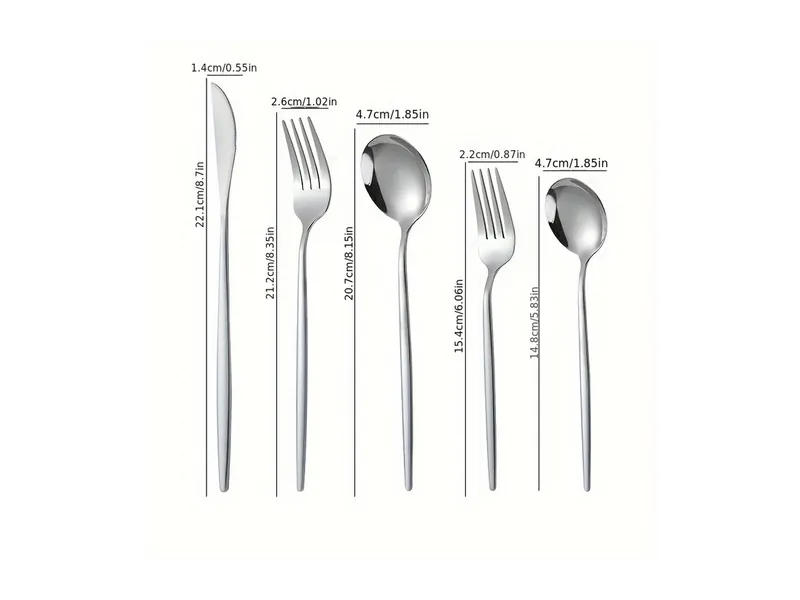
Mirror or Brushed Cutlery? A Finish Sample Comparison Card
· Yumingxing
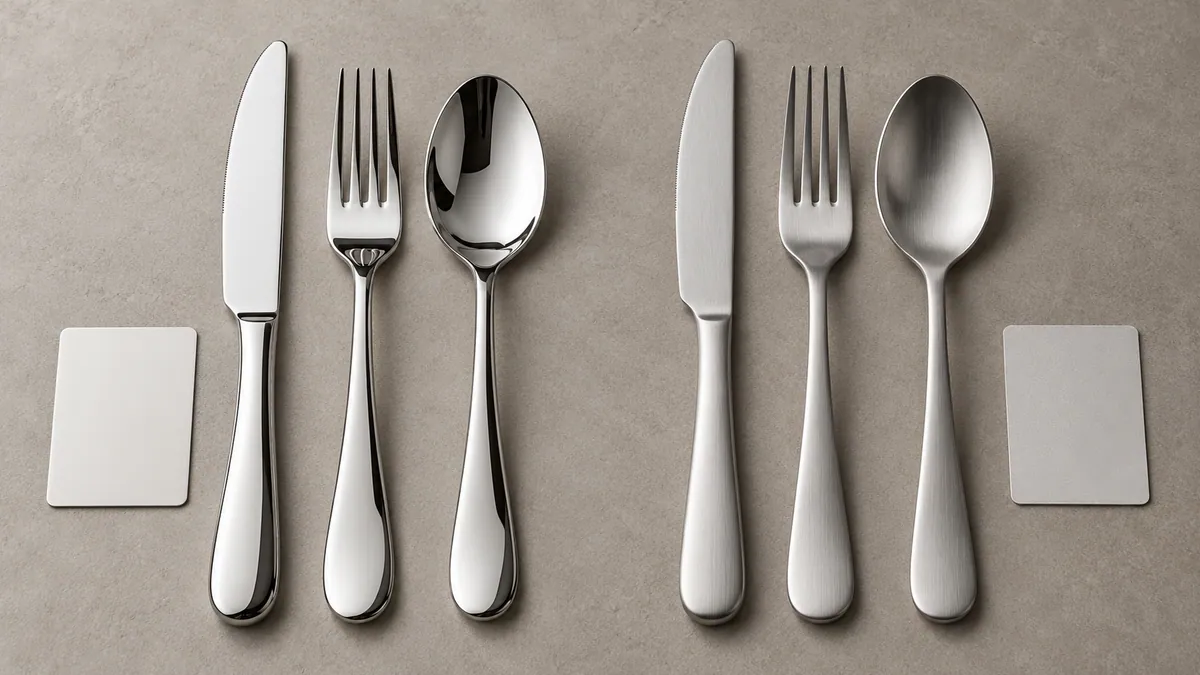
The cover is a generated editorial comparison, not a photograph of Yumingxing finish samples or a claim that both finishes are offered on one model.
“Mirror” and “brushed” are useful starting words, but they do not identify an approved finish on every knife, fork and spoon. A buyer choosing a stainless-steel cutlery set for a retail or hospitality programme needs a reference that a supplier can reproduce and a receiving team can recognize. Use this card to compare samples of the same agreed model, not to infer durability, material grade or food-contact suitability from appearance.
Yumingxing’s English homepage says mirror and brushed finishes can be discussed, subject to the model. Its Portuguese-style five-piece catalogue page describes a mirror-polished option. Neither page establishes that a brushed version of that particular set is available. Request written feasibility and actual samples for the selected model before placing a branded order.
Hold the product constant before judging the surface
Ask for samples with the same component shape, size and agreed material specification. Compare a knife with a knife, a dinner fork with a dinner fork and a spoon with a spoon. A different handle profile or steel component may change the visual impression and make a “finish only” comparison misleading.
| Record on each sample card | Why it belongs on the card |
|---|---|
| Supplier, model, component and sample revision | Prevents an approval from being applied to another pattern or piece. |
| Finish name and physical reference | Descriptive names alone can be interpreted differently. |
| Areas covered: face, back, edges and handle | Avoids approving only the visible front of a sample. |
| Lighting and viewing method used by the buyer | Makes later comparison repeatable without pretending a photo is a standard. |
| Logo position, if requested | Checks whether marking affects the agreed visible surface. |
| Approved variation and unresolved points | Separates acceptance from items still requiring a revised sample. |
View the whole set under the lighting in which the buyer expects to present it, then inspect each component from both sides. Record the reference sample ID and take labelled photographs as supplementary evidence. Photographs can shift with exposure and screen settings; retain the physical sample or another agreed reference for final comparison.
Make the decision explicit
Mark each component approved, revise and resample, or not evaluated. If the fork is acceptable but the knife handle differs, do not approve “the set” without identifying that exception. Ask the supplier to confirm which finish can actually be produced on each selected component, the sample route, any MOQ or price change, and the timing after approval. Those terms depend on the model and must not be assumed from a finish name.
This card covers only the finish-choice decision. The broader sample approval record should still capture material, dimensions, composition, logo, packaging and any unresolved production details. Send the model and finish reference through the enquiry page when asking for availability.
Sources and limits
- Yumingxing English homepage — mirror and brushed are discussion options by model; checked 2026-09-30.
- Portuguese-style five-piece catalogue model — catalogue reference for a mirror finish; checked 2026-09-30.
The comparison card is an editorial procurement tool. It does not certify coating performance, corrosion resistance or legal compliance; request applicable product-specific evidence separately.