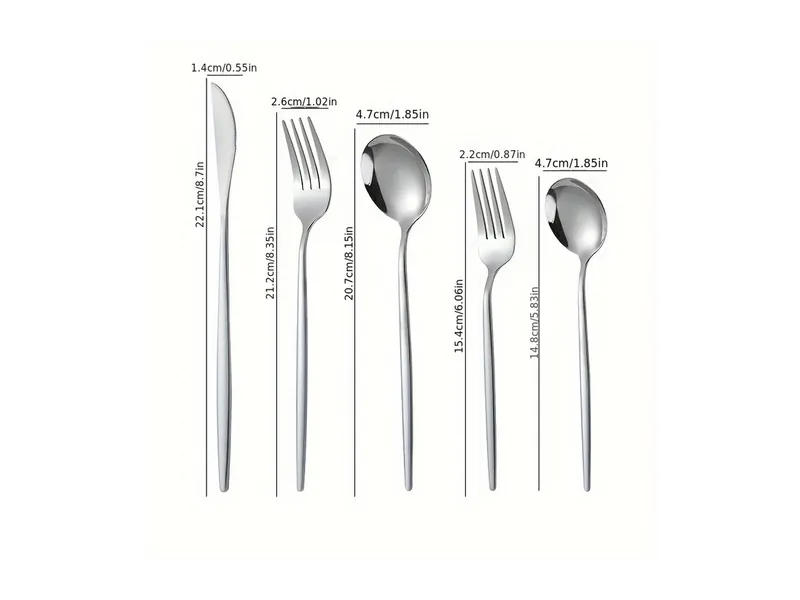
Where Should a Cutlery Edge Check Look? Map the Contact Zones
· Yumingxing
The cover is a generated editorial illustration, not an inspection finding, safety result or Yumingxing production photo.
An instruction to check cutlery for “sharp edges” can be ambiguous: the intended working edge of a table knife is different from an unintended rough spot on its handle, the outside of a fork tine or a spoon rim. Before a buyer approves a sample or inspection brief, map where people handle and contact each piece, then agree which areas need an unintended-edge assessment and how the decision will be recorded. Do not write a blanket “no sharp edges” requirement that contradicts the selected knife’s intended function.
Yumingxing’s quality guidance asks buyers to specify and check edges against the approved sample, with inspection criteria agreed in writing. Independent cutlery testing organisation CATRA lists inspection for defects and safety among table-cutlery evaluation services. Its sharp-edge safety tester information describes an instrument for evaluating unintended sharp edges on products including cutlery. Availability of an evaluation tool is not a pass result or certification for a Yumingxing item.
Mark the zones on the actual proposed sample
| Piece and zone | Buyer should identify | Decision to agree |
|---|---|---|
| Knife working edge | Intended cutting profile and meal | Keep separate from unintended contact-edge checks |
| Knife handle and transition | Grip surfaces, ends and blade-to-handle junction | Which conditions are unacceptable at normal contact points? |
| Fork | Tine ends, outside tine edges, neck and handle | Which points are intended geometry and which need finishing review? |
| Spoon | Bowl rim, underside, neck and handle | Which areas contact lips, hands or storage surfaces? |
| All pieces | Logo, decorative transition or added fitting, if present | Does a local feature need its own check? |
| Inspection record | Sample revision, zone, method, finding and reviewer | Can a deviation be traced to the exact piece and location? |
The buyer and a qualified inspector should agree a suitable method and acceptance criteria before testing or bulk inspection. A visual review may help identify a location but cannot by itself establish every safety claim. Avoid unsafe improvised checks such as running an unprotected finger along an edge. If a formal safety result is required for the destination or customer, obtain advice on the applicable method and evidence for the actual product.
Attach marked sample photographs and the approved zone list to the inspection brief. If a handle, fork tine, spoon bowl or knife geometry changes, review the affected zones again. A separate inspection plan should define whether results are counted by piece, set or carton; this guide defines where on a piece the team must look. It does not assert that a product has passed a safety evaluation.