Approve the Cutlery Box Insert Before the Artwork Is Locked
· Yumingxing
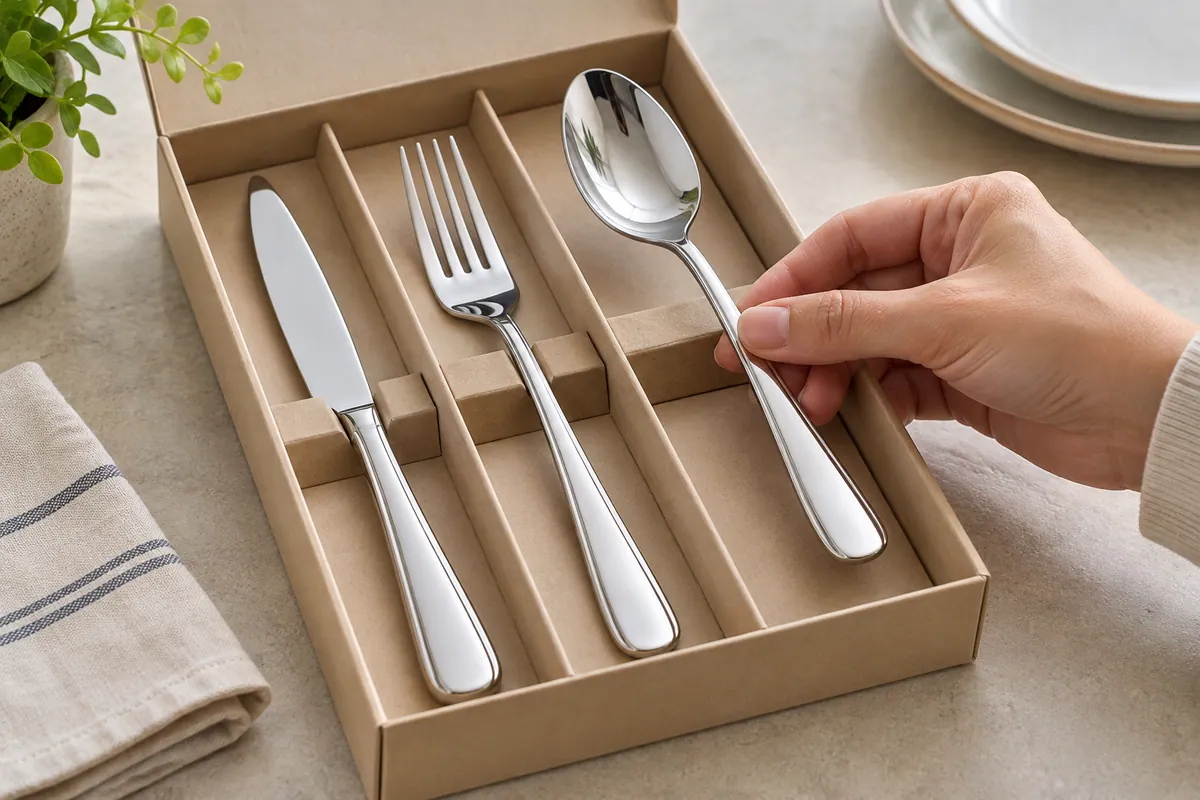
The cover is a generated editorial illustration, not an approved Yumingxing retail pack or a packaging test.
A retail box can have the correct outside dimensions but still disappoint when opened: a fork may be hidden, a spoon may sit in the wrong slot, or a buyer may have to pull awkwardly to remove a knife. Before locking the box artwork, approve a complete insert mock-up with the proposed cutlery pieces inside. The decision here is the customer’s opening and piece-identification path, not whether a shipping carton will survive transport or fit a shelf.
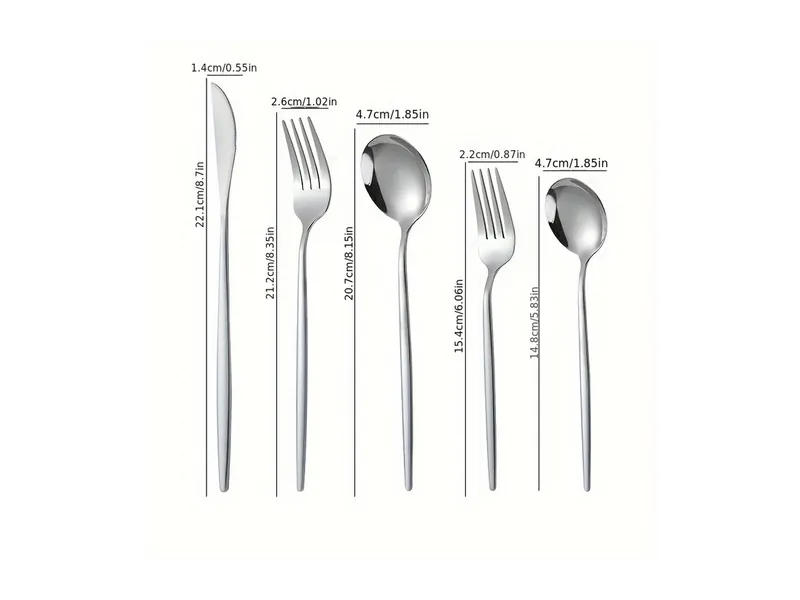
Yumingxing’s cutlery RFQ guide asks buyers to define set composition, packaging and artwork. Its Portuguese-style five-piece catalogue set lists knife, fork and spoon components that a buyer can use to describe a proposed assortment. These pages do not establish a particular insert design, retailer approval, packaging material certification or actual box contents for an unconfirmed order.
Check the opening sequence with a physical mock-up
| Field | Buyer should record | What to observe |
|---|---|---|
| Pack identity | Set count, exact component list and package revision | Match the mock-up to the quoted configuration |
| Positions | Slot assigned to each knife, fork and spoon | Check that the piece shown on artwork matches the slot |
| Visibility | What the customer sees when the lid or sleeve first opens | Note whether any piece or finish is obscured |
| Retention | How each item is held in the insert | Observe normal movement without claiming a transport-test result |
| Removal | Order and motion for taking out each item | Ask a reviewer unfamiliar with the pack to try it |
| Repacking | Whether a removed item can return to its identified slot | Record difficulty and any needed instruction |
| Approval | Mock-up ID, artwork version, reviewer, date and open points | Link the release decision to one configuration |
Use the actual proposed component dimensions and a realistic insert mock-up. A flat drawing cannot reveal every clearance, overlap or removal issue. Have at least one reviewer open the pack without explanation, then compare the observed sequence with the intended product presentation. Record what happened rather than calling the insert “easy to use” without an agreed criterion.
Keep this check separate from two other decisions. The shelf-fit check concerns the closed unit in its display orientation. A transport test concerns the complete packed configuration under an agreed test method. A neat opening demonstration proves neither shelf capacity nor shipment resistance.
Send the signed insert mock-up reference with the final component list and artwork revision. If the buyer changes the knife length, fork head, spoon type, piece count or box structure, reopen the affected slots and removal steps before production approval. This gives a private-label buyer a traceable pack experience without inventing claims about packaging performance.