Will the Cutlery Fit the Wash Basket? Check Loading Before Ordering
· Yumingxing
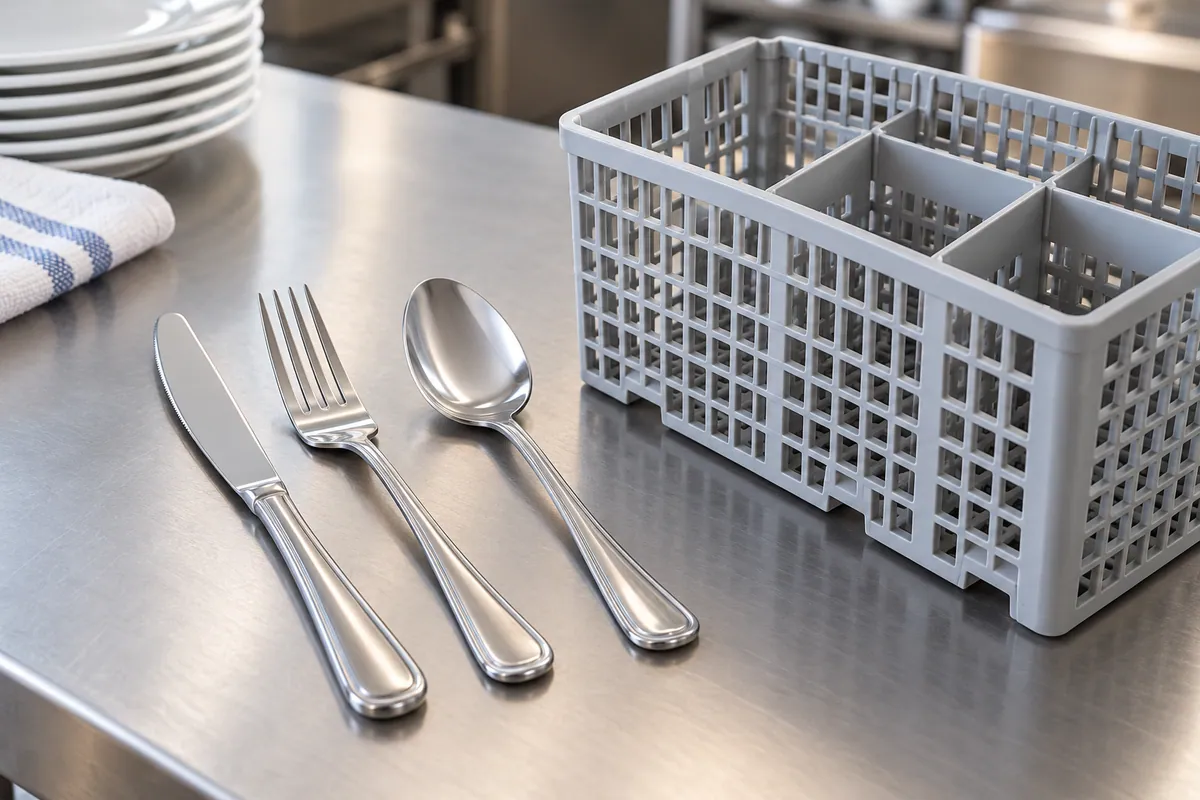
The cover is a generated editorial illustration, not a Yumingxing product photograph or a dishwasher test.
A hotel or restaurant can like a cutlery sample at the table but find that its usual wash basket is awkward to load or unload. The useful pre-order question is physical and site-specific: Can staff place and remove the proposed knife, fork and spoon in the basket used for this service? Check that question with an actual sample and the site’s equipment before signing off the component configuration. A fit trial does not establish dishwasher resistance or a care claim.
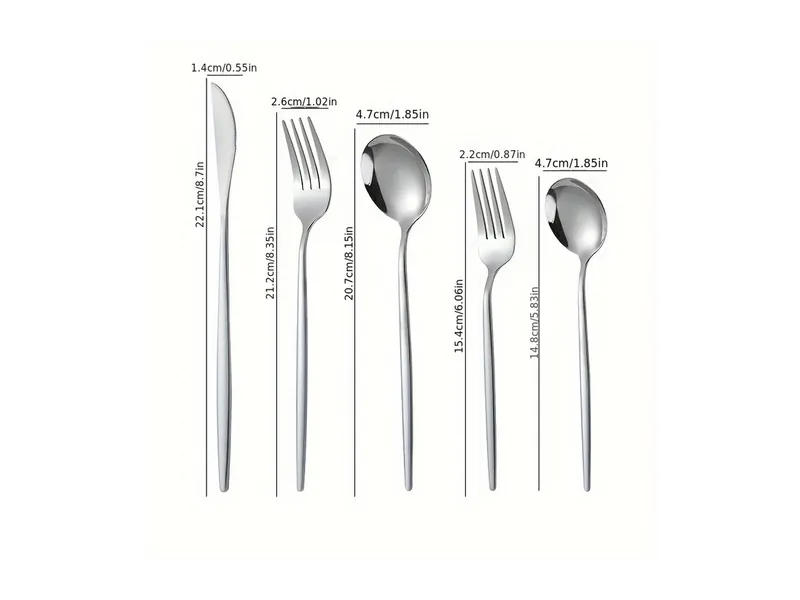
Yumingxing’s current cutlery collection asks buyers to confirm each component and its care instructions. The Portuguese-style five-piece set lists a dinner knife, dinner fork and two spoon types, but does not give a dimension for an unconfirmed order. CATRA describes dishwasher-resistance testing equipment; that is a separate performance-evaluation topic, not evidence that any proposed set has passed a test.
Make a physical loading card
| Field | Buyer records | Physical check |
|---|---|---|
| Site equipment | Basket model or photo, compartment dimensions and intended loading method | Use the actual basket or an equivalent identified sample |
| Cutlery identity | Model and revision of each knife, fork and spoon | Avoid approving one item and buying another |
| Placement | Which components share a compartment and their orientation | Observe whether pieces can be placed without forced bending |
| Retrieval | How staff remove the pieces after normal handling | Check reach, snagging and grip with intended users |
| Count | Planned pieces per basket and per service cycle | Record a trial count, not a universal capacity promise |
| Care question | Proposed finish and supplier’s written instructions | Keep physical fit separate from wash suitability |
| Approval | Trial date, participants, sample ID and open questions | Link the order to a specific result and version |
Try the complete proposed assortment, not just the shortest spoon. Knife length, fork head and spoon bowl can interact differently with basket openings and neighboring pieces. Record any contact or retrieval difficulty as an observation; avoid labeling the product defective from a single loading attempt. If the site uses more than one basket or changes the planned loading density, test those conditions separately.
The card deliberately does not answer whether the material, finish or decoration will tolerate the site’s wash cycle, chemicals or drying conditions. Those claims require the correct component specification, care guidance and evidence for the actual configuration. A quick rack-fit trial must never be rewritten as a dishwasher-safety certification.
Attach the completed card to the RFQ with photos of the identified basket, the sample versions, intended quantities and any unresolved care question. If the supplier changes the knife, fork, spoon or finish, repeat the affected checks before the buyer approves the production set. This separates a practical handling decision from a performance claim that needs different evidence.