How Will Cutlery Cartons Fit on a Pallet? A Buyer Handoff Sheet
· Yumingxing
The cover is a generated editorial illustration, not a Yumingxing pallet load or approved transport plan.
A buyer may know how many retail cutlery sets are in each shipping carton, yet still lack the information needed to plan a pallet. Carton footprint, allowed orientation, gross weight and the receiver’s pallet constraints affect the handoff. Before approving a load sketch, ask for the actual packed carton and unit-load specification. This sheet is for collecting decisions; a simple count of boxes on a drawing cannot establish safe stacking or carrier acceptance.
Yumingxing’s cutlery RFQ guide asks for pieces per box, carton marks, destination and shipment arrangements. The GS1 Package and Product Measurement Standard covers nominal measurements from consumer unit through pallet and intermediary levels. Those sources support distinguishing measurement levels, not a claim that any particular Yumingxing pallet configuration has been measured or approved.
Put the physical inputs on one sheet
| Input | Record for each carton or load | Who confirms it |
|---|---|---|
| Packed carton | External length, width, height, gross weight, pack revision and count of retail units | Supplier using a filled, closed carton |
| Allowed orientation | Which face may be the base; whether rotation is permitted | Packaging owner after checking the actual pack |
| Pallet | Platform type, usable footprint and height, tare weight, destination restriction | Buyer, warehouse or carrier as appropriate |
| Layer pattern | Cartons per layer, overhang or gap rule, mixed-variant separation | Warehouse with a physical layout trial |
| Stack plan | Proposed layers, interlayer material, restraint and total load height/weight | Qualified logistics or packaging reviewer |
| Access and identification | Required visible marks and handling access after wrapping | Receiving warehouse and shipper |
| Approval record | Drawing/photo revision, checker, date and unresolved limits | Named buyer and logistics contacts |
The arithmetic cartons per layer × proposed layers = planned cartons per pallet is a quantity check only. Multiply the result by retail units per carton to reconcile the order, then account for incomplete pallets separately. Neither formula proves that the lower cartons can bear the load, that the pallet can carry it, or that the load fits the vehicle. Confirm those limits with the responsible parties and, where needed, test the actual packed configuration.
Keep three measurement levels separate
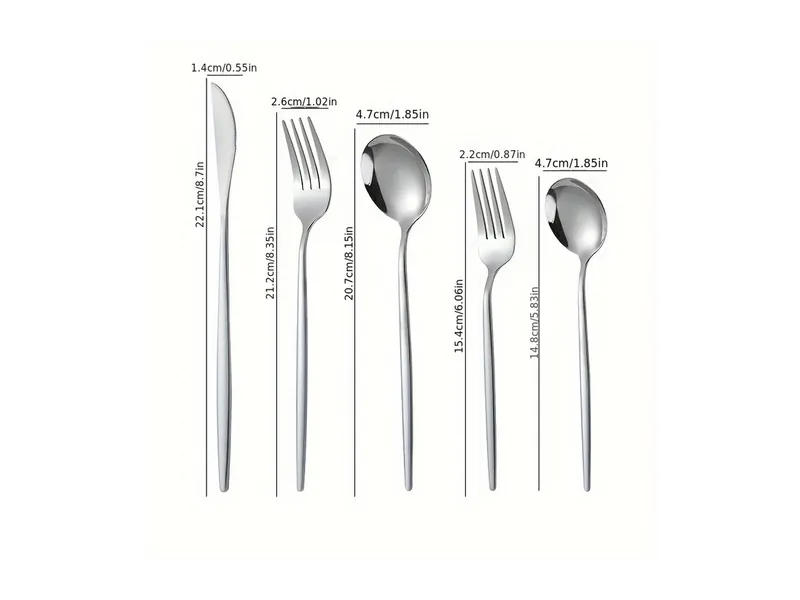
A loose knife, fork or spoon dimension does not replace the packed retail-unit dimension; the retail-unit dimension does not replace the sealed shipping-carton dimension. A pallet drawing should show whether its overall height and weight include the pallet itself and any wrap or restraint. Use the same unit of measure and orientation across the drawing, packing list and warehouse instruction. If the carton, insert, retail pack or count per carton changes, recalculate and reapprove the pattern.
Ask the supplier for a photograph of a representative filled carton and a trial layer. Approve only the version that matches the order and receiving conditions. This article asserts no actual pallet capacity, stacking strength, freight rate or compliance result for a Yumingxing shipment.