Can a Magnet Confirm the Steel Grade of a Cutlery Set?
· Yumingxing
The cover is a generated editorial illustration, not a Yumingxing material test or a photograph of a supplied set.
“Does this spoon stick to a magnet?” is an easy question to ask when checking stainless-steel cutlery. It is not a reliable answer to “What exact grade did we buy?” Magnetic response varies with stainless-steel family and processing. In particular, cold working can give some austenitic stainless steel a partial magnetic response. The British Stainless Steel Association’s guide to on-site grade sorting says conclusive grade identification calls for calibrated chemical analysis; its magnetic-permeability note explains the effect of working on austenitic steel.
For a cutlery order, the useful question is therefore: Which grade was agreed for each component, and how will the supplied batch be linked to that specification? A knife, fork and spoon need not have an identical component specification. Record the agreement rather than assuming one grade from the set name or a quick magnetic check.
A component-level material check
| Record | Buyer asks for | Why it matters |
|---|---|---|
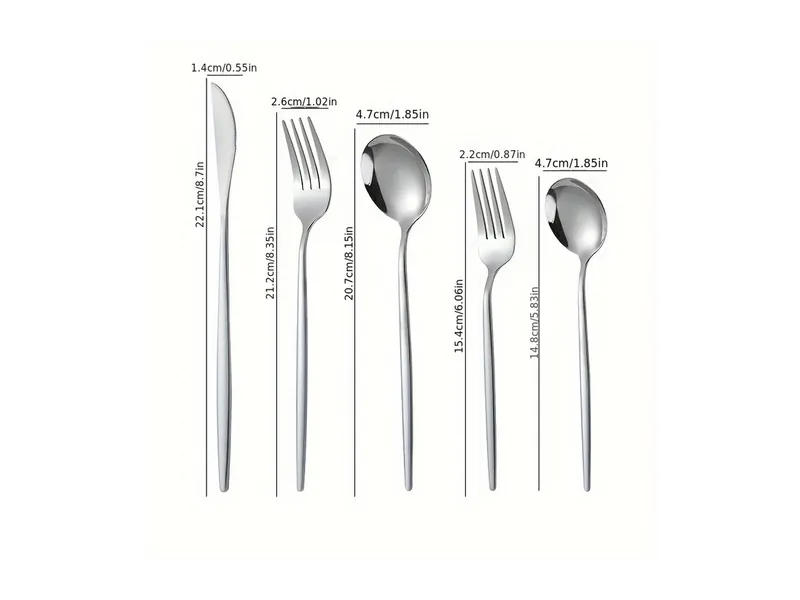
| Component list | Separate knife, dinner fork, dinner spoon and other pieces | Prevents one grade statement being read as applying to all pieces |
| Agreed grade | Grade designation for each component in the quotation and order | Establishes what is actually being purchased |
| Sample identity | Model, sample revision and marked component | Connects approval to the offered configuration |
| Batch link | Lot or production reference and a traceable document | Connects delivered goods to records |
| Verification method | Qualified chemical analysis where exact grade confirmation is required | A magnet alone cannot give an exact composition |
| Acceptance owner | Who compares evidence with the order before release | Prevents an observation being mistaken for approval |
Yumingxing’s cutlery collection advises confirming material grade by component, and its cutlery RFQ guide asks buyers to specify the grade and supporting requirements clearly. Those pages do not disclose the grade of an unconfirmed sample or certify a particular batch.
A magnetic check can be recorded as a field observation when comparing parts or spotting an unexpected change. Describe the component, location and conditions; do not translate “magnetic” into a precise grade, food-contact approval or corrosion-resistance promise. If the agreed grade matters to acceptance, ask the supplier for the relevant documents and arrange suitable qualified analysis under the purchase agreement.
Before placing a bulk order, put the component table in the RFQ and state which document, sampling plan and test method will close any grade question. That turns a quick magnet demonstration into a controlled procurement decision without claiming more than the observation can show.