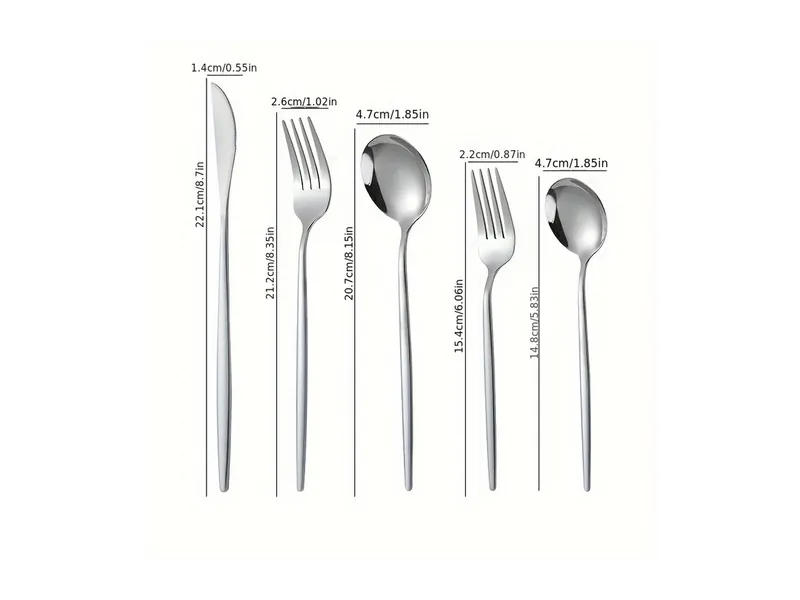
One-Piece or Two-Piece Table Knife? Specify the Construction Before Ordering
· Yumingxing
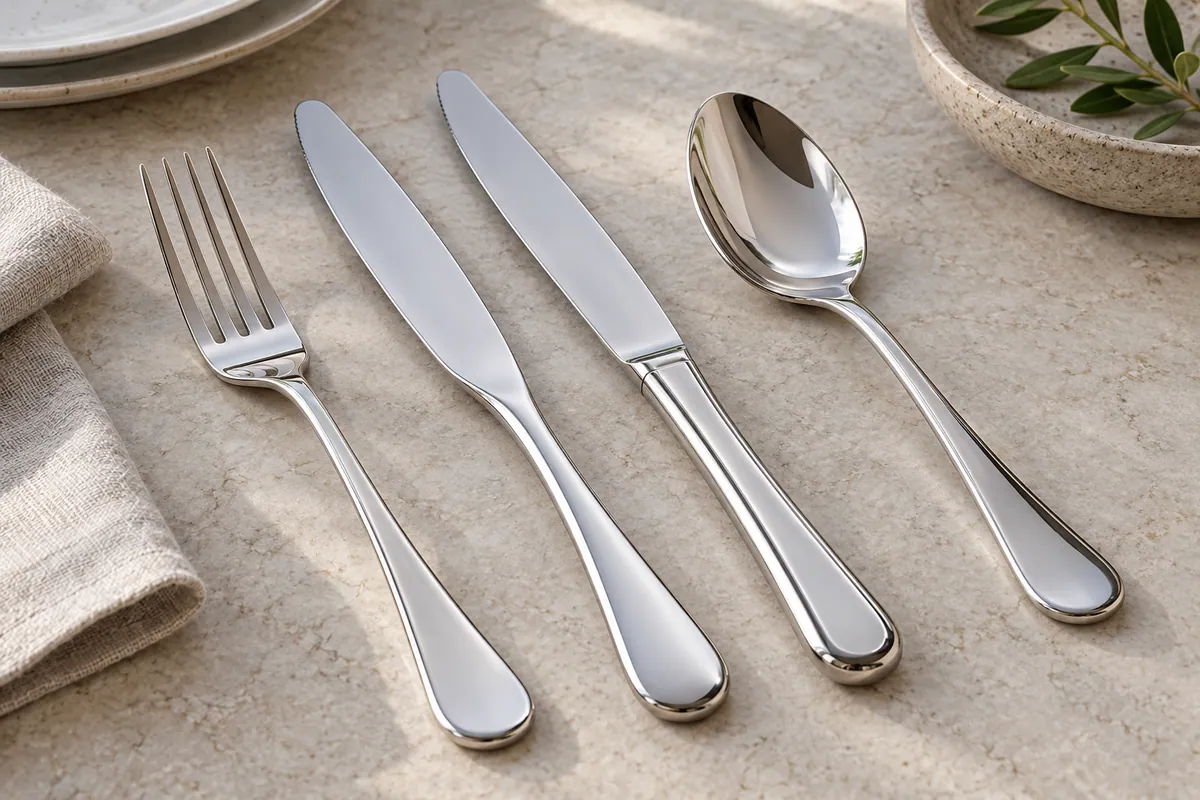
The cover is a generated conceptual illustration, not a photograph of Yumingxing knives or proof of their construction.
Two stainless-steel table knives can look similar in a set photo while being built differently. One may be formed as a single metal piece; another may join a separate blade and handle. If that choice affects a buyer’s material specification, appearance, cleaning plan or reorder consistency, put knife construction on the RFQ and approve the actual proposed sample. Do not infer the construction or steel grade from a catalogue image.
The British Stainless Steel Association’s cutlery-grade note describes two-piece table knives with a hardenable martensitic blade and an austenitic handle, as well as single-piece martensitic knives. These are general industry examples, not a claim about a particular Yumingxing model. Yumingxing’s cutlery collection tells buyers to agree the knife’s component specification instead of applying one set-wide material label.
Put the knife, not only the set, on the RFQ
| Decision field | Ask the supplier to identify | Approval record |
|---|---|---|
| Proposed knife | Model, size, finish and sample revision | Sample ID and dated photo |
| Construction | One-piece, two-piece or another design | Drawing or written construction description |
| Blade material | Formal grade for the blade, if it is a separate part | Component-level specification and agreed evidence |
| Handle material | Formal grade for the handle, if different | Component-level specification and agreed evidence |
| Join and finish | Visible transition, surface finish and care guidance | Close-up sample check and approved care text |
| Intended use | Meal, user group and cleaning routine | Trial notes and any separate formal test requirement |
| Release | Who accepts the exact knife configuration | Signed sample/specification reference for production and reorder |
For a one-piece proposal, record the material and finish of the whole knife rather than filling separate blade and handle grade boxes by assumption. For a two-piece proposal, identify both components and the joint. The BSSA examples explain why a fork or spoon grade cannot automatically be copied onto a knife blade. They do not establish which construction is best for every menu or cleaning process.
Inspect the actual sample in ordinary dining use: look at the transition between blade and handle, grip, balance, edge profile and the intended cleaning instructions. Record observations and deviations, then agree any measurable performance test separately. A casual sample trial is not a certified cutting, corrosion or food-contact test.
Before placing the order, attach the approved knife sample reference and component specification to the set bill of materials. If the supplier changes the blade, handle, join or finish, request a revised sample and reapprove the affected points. That keeps a later reorder tied to the knife the buyer actually selected rather than to a generic set photograph.