Where Can Cutlery Rub in the Pack? Check the Contact Points
· Yumingxing
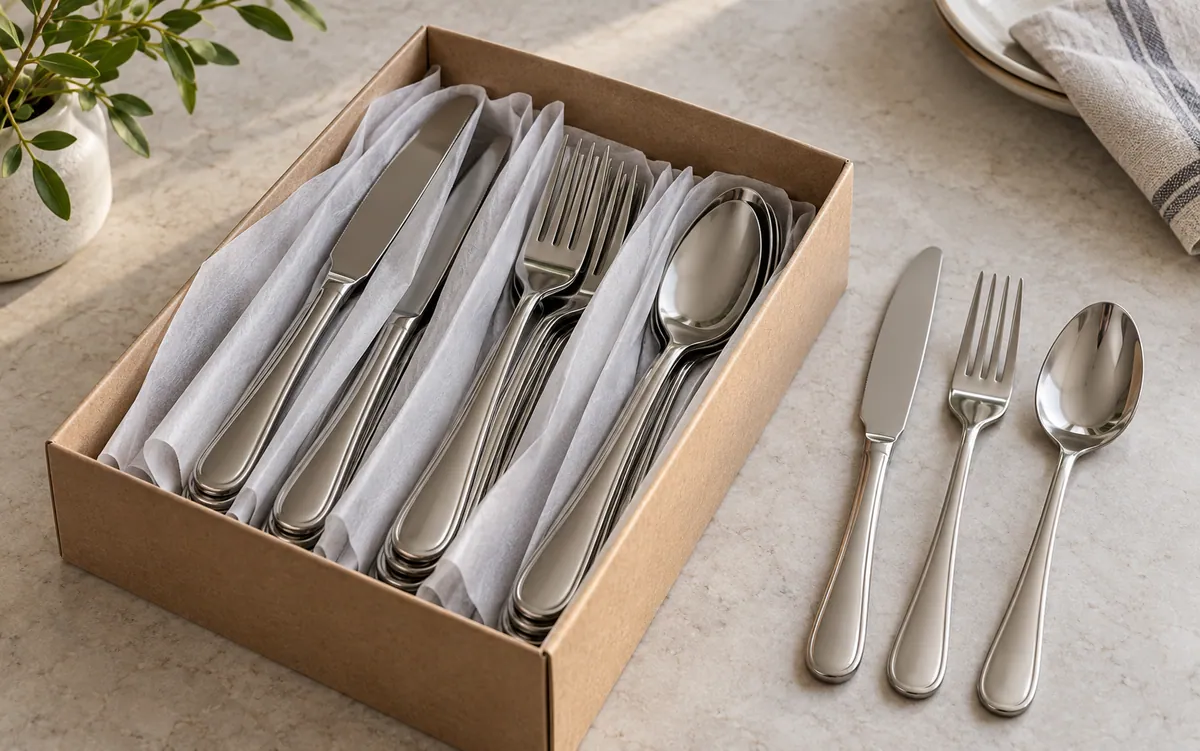
The cover is a generated editorial illustration, not a photograph of a Yumingxing shipment or approved pack.
An attractive open-box presentation may hide the places where a stainless-steel knife, fork and spoon touch each other when the pack is closed and handled. The buyer’s decision is to approve the actual packing arrangement and contact points for the chosen finish, not to assume that a soft-looking insert protects every visible surface. This check is distinct from a formal transport test.
Yumingxing’s quality guidance asks buyers to specify finish, set composition and packing against an approved sample. The British Stainless Steel Association’s cleaning guidance notes that hard objects and certain abrasive media can leave surface scuffs, especially on polished surfaces. Neither source proves that a proposed cutlery box passes shipment handling or prevents every mark.
Map the closed-pack contacts
| Check | Use the proposed physical pack | Record |
|---|---|---|
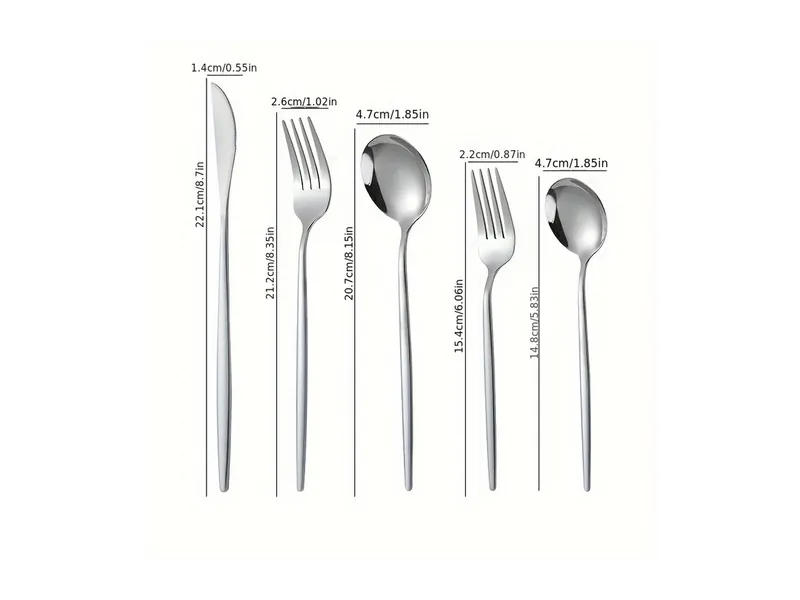
| Components | Exact knife, fork, spoon and any additional pieces | Model, finish and count |
| Placement | Position and orientation of every piece | Photo before the box closes |
| Metal-to-metal contact | Edges, tines, bowl and handles near another piece | Touch points needing review |
| Other contact | Insert, tie, sleeve, paper and box surfaces | Material and visible pressure points |
| Closure | Normal lid, band or wrapper operation | Whether parts shift or press together |
| Opening | Remove pieces as the buyer’s customer would | Visible scuffs or snagging on the sample |
| Release | Approved pack revision and retained sample | Signed reference for production and reorder |
Use the same finish and component mix as the intended order. Examine the open pack, close it normally, then open it and inspect the visible surfaces under agreed light. Record observations before deciding whether a divider, sleeve or orientation change is needed. Avoid inventing a universal drop height or rub-cycle pass mark; if shipping performance is important, agree a separate transport-test configuration and acceptance method for the actual packed carton.
A clean first sample is only a sample observation. Put the accepted component layout, insert revision and surface-photo reference into the purchase specification, and recheck when the finish, box or component count changes.