What Will Touch the Cutlery During Cleaning? Send an Exposure Brief
· Yumingxing
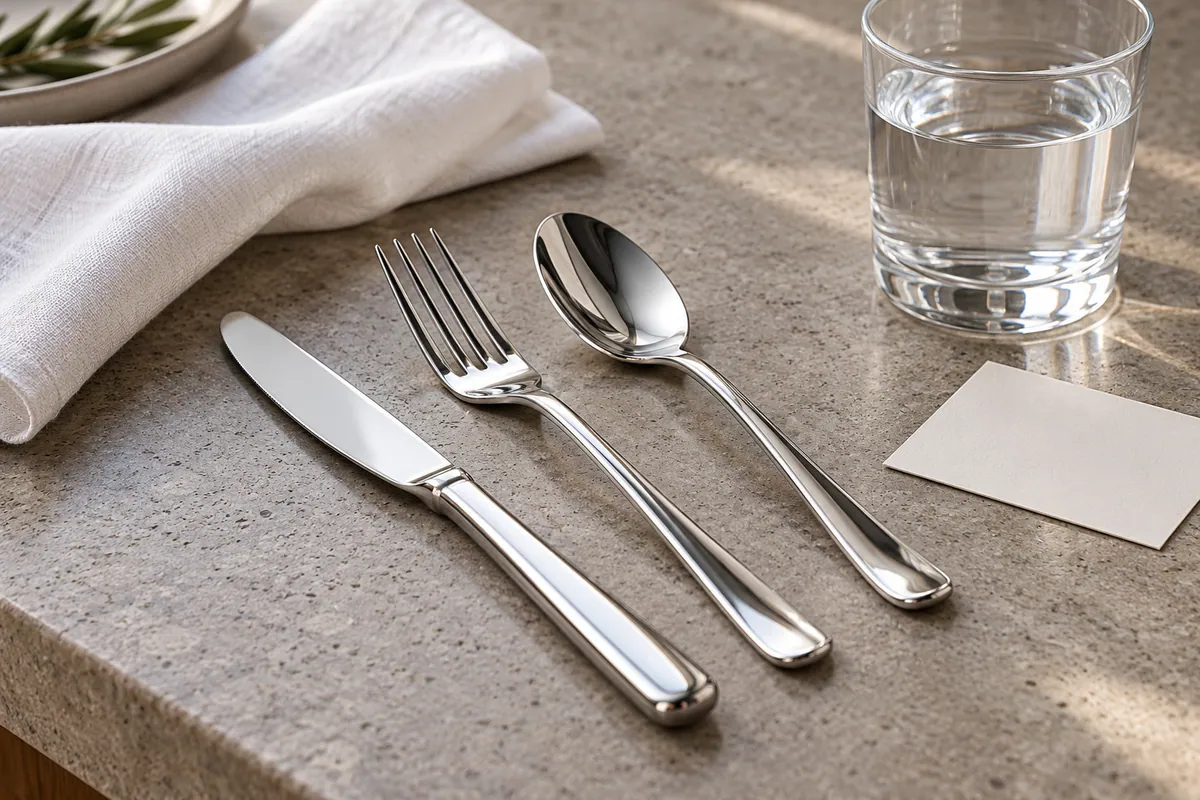
The cover is a generated editorial illustration, not a cleaning trial or a photograph of supplied Yumingxing cutlery.
“For restaurant use” does not tell a cutlery supplier what will happen to a knife, fork or spoon after service. A buyer may use a commercial washer, a hand-wash station, a sanitising routine or a storage process with prolonged moisture. Before approving the proposed stainless-steel material and finish, describe the real cleaning exposure and ask for product-specific care guidance. A grade name alone cannot establish performance under an unspecified routine.
The British Stainless Steel Association’s cleaning guidance discusses routine washing and rinsing, and warns that chloride-containing cleaners, concentrated bleach contact and prolonged salt exposure can cause staining or pitting on stainless-steel surfaces. It is general stainless-steel guidance, not an approved cleaning recipe or a test result for a particular cutlery model. Yumingxing’s quality guidance asks buyers to request model-specific care and cleaning instructions.
Send the operating conditions with the RFQ
| Brief field | Buyer describes | Supplier should clarify |
|---|---|---|
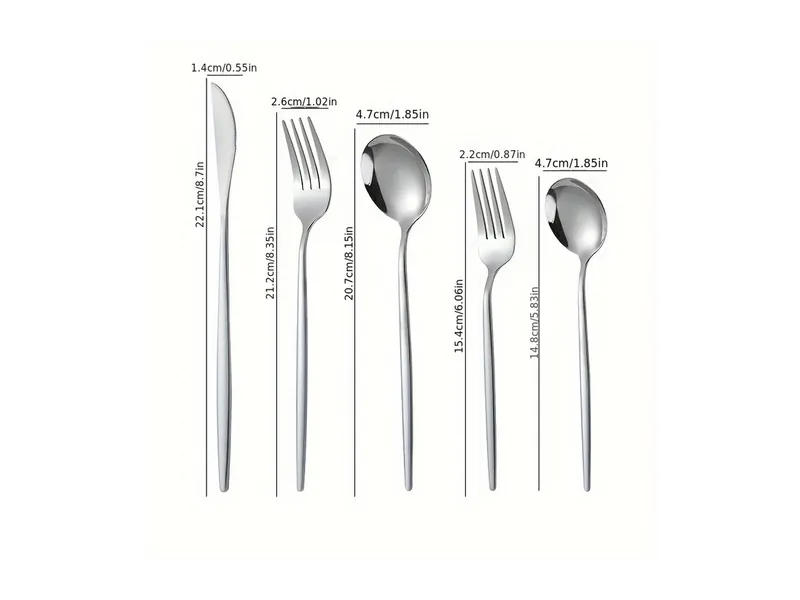
| Components | Exact knife, fork, spoon and finish options | Whether guidance differs by piece or coating |
| Washing route | Hand wash, machine wash or both | Instructions supported for the proposed configuration |
| Products used | Detergent and sanitiser identity, following the user’s own site procedure | Compatibility question to review; no blanket approval assumed |
| Contact conditions | Concentration, temperature and dwell time where known | Limits or unresolved conditions requiring evaluation |
| Rinse and dry | Water rinse, drying method and delay before storage | Care steps for the approved sample |
| Storage | Moisture, stacking and contact with other materials | Packing or handling precautions to agree |
| Evidence | Intended claim and destination | Relevant sample-specific guidance or agreed testing plan |
Do not ask the supplier to certify a vague phrase such as “chemical resistant.” Identify the actual process, product revision and intended claim. If a cleaning agent or contact condition is unknown, mark it open and obtain the site’s procedure before releasing a care instruction. Follow the cleaning-product maker’s safety directions and the user’s local operating rules; this worksheet does not prescribe concentrations or sanitising methods.
Trial the proposed pieces under the buyer’s intended routine only under an agreed, safe procedure, and record observations against the identified sample. Any formal dishwasher, corrosion or food-contact claim needs separately defined evidence for the exact product and market. Attach the final care guidance and open questions to the approved specification so the purchasing, operations and artwork teams use the same version.