A Brown Mark on New Cutlery: What Should Receiving Record?
· Yumingxing
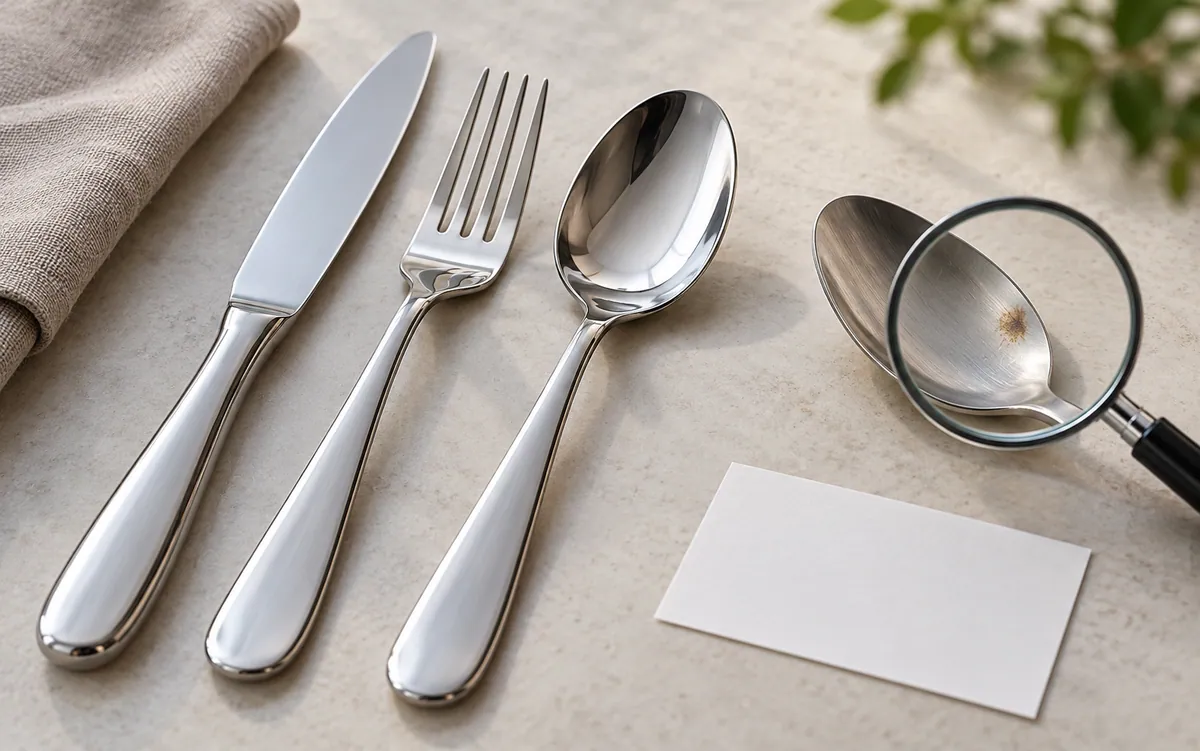
The cover is a generated editorial illustration, not a photograph of a Yumingxing shipment or a diagnosis.
A brown spot on newly received stainless-steel cutlery is a reason to preserve evidence, not to announce that the entire batch is the wrong grade. Record the condition of the affected knife, fork or spoon, identify the carton and lot, and keep a representative piece before cleaning or returning it. The buyer can then ask a qualified party to investigate the cause against the exact sample and handling history.
The British Stainless Steel Association explains that rust-coloured staining on stainless surfaces can arise from iron contamination during storage, handling or fabrication. That is a possible mechanism, not a diagnosis of this shipment. Yumingxing’s quality guidance asks buyers to identify the product and evidence scope before discussing inspection or documents.
Record the observed condition
| Field | Receiving team records | Why it matters |
|---|---|---|
| Identity | Order, model, component, finish, carton and lot marks | Links the observation to a defined shipment |
| Extent | Number examined and number with a visible mark, by component | Separates one piece from a wider pattern |
| Location | Which face and area of the piece shows the mark | Allows repeat inspection of the same zone |
| Images | Whole piece, close-up with scale, carton and packing condition | Preserves context without relying on memory |
| Handling | When opened, storage conditions and any wash or wipe already done | Keeps later changes from being mistaken for arrival condition |
| Retained pieces | Labelled affected item and comparison item from the same lot | Supports a controlled review |
| Decision | Hold scope, owner and next review date | Prevents an informal assumption from becoming acceptance |
Avoid abrasive rubbing or improvised chemical treatment before the condition is documented. Do not use a magnet or colour alone to identify a steel grade or an exact cause. If the buyer needs an investigation, agree who will examine the retained pieces, which questions they will answer and whether a formal test is required. Any cleaning or laboratory procedure belongs to qualified personnel following its own safety instructions.
Release, rework or claim decisions should refer to the agreed specification and investigation record. Keep the unaffected and affected quantities distinct so the whole delivery is neither rejected nor accepted on the basis of one unexplained photograph.