Who Controls Custom Cutlery Tooling After the First Order?
· Yumingxing
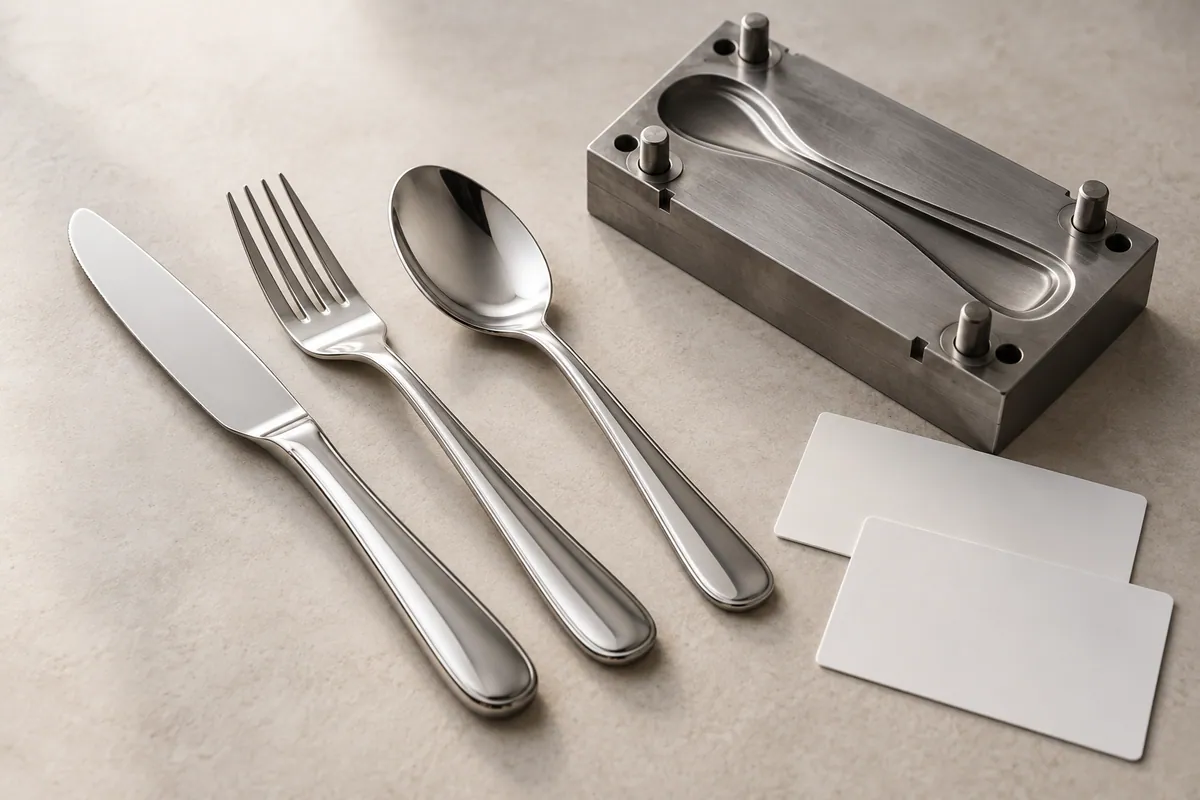
The cover is a conceptual generated image, not a Yumingxing tool, customer design or finished SKU.
Paying a development charge does not answer who owns, stores or may use a custom cutlery tool after the first production run. Those are separate commercial and intellectual-property questions. Before approving a new handle profile or component shape, put the tool, design files and transfer conditions into the written agreement. Do not assume ownership from an invoice line alone.
WIPO’s guide to supplier IP agreements explains why supplier-created designs, access and ownership need express contract terms. The Yumingxing OEM/ODM page describes customization routes; it does not state the terms for an unconfirmed buyer’s tooling. This article is a negotiation checklist, not legal advice or a statement of the factory’s standard contract.
Put each asset on the same sheet
| Asset or decision | Record before payment | Evidence to request at handoff |
|---|---|---|
| Physical tool | Tool ID, component served, design revision, payer, owner, storage location | Inventory photo or drawing, condition and location record |
| Digital design | Source files, approved drawings, revision history, permitted users | Final file list and version references |
| Use rights | Who may produce with the tool, for which buyer or market, and whether exclusivity applies | Signed scope and any permitted exceptions |
| Maintenance | Who inspects, repairs, replaces and pays for wear or damage | Maintenance log and agreed acceptance method |
| Exit route | Notice, transfer cost, packaging, shipping and timing if production moves | Handoff steps and contact responsible for release |
Ask whether a change to one piece requires a new tool or only an adjustment. Tie each quotation and sample approval to a named revision so that the buyer does not pay twice for an unclear asset. Where drawings or branding are supplied by the buyer, identify who can access them and how copies are handled after the project ends.
The practical gate is a signed asset schedule before the first tool payment. If ownership, permitted use or transfer remains disputed, hold the tooling decision for commercial and legal review; a polished sample cannot resolve a missing contract term.