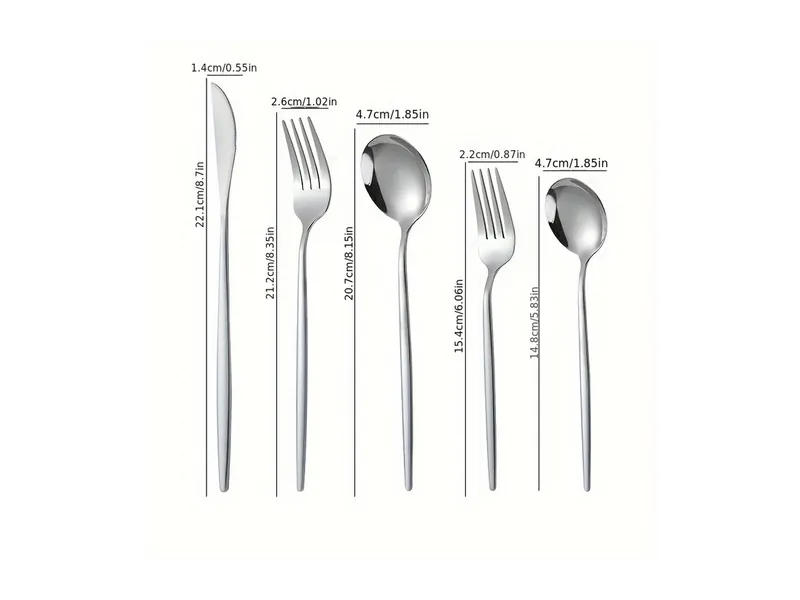
Canada Flatware Market Research: Bilingual Packaging and Channel Entry Costs
· Yumingxing
Research accessed 30 October 2026, Asia/Shanghai. This is public-source desk research, not store visits, a consumer survey, laboratory testing or a supplier quotation. The AI-generated cover is an editorial illustration, not a sampled SKU or factory photograph.
For Canadian flatware procurement, establish the bilingual selling unit and the fulfilment cost before multiplying designs. A supermarket box and an e-commerce parcel may contain the same utensils, but they need different protection, presentation and commercial calculations. A national launch also needs a deliberate Quebec review; translating only the online title does not resolve physical packaging requirements.
This second country study combines 2023–2025 import records, Canadian retail statistics, twelve catalogue observations and original regulatory material. IKEA Canada and Canadian Tire provide two large physical-chain references; Walmart.ca and Wayfair Canada provide two online sales channels. All observations were made online. Catalogue visibility does not establish nationwide stock, transaction prices or sales volume.
1. Separate the import signal from the retail opportunity
The UN Comtrade queries use Canada, reporter 124, imports, world partner 0 and China partner 156. Values below are USD millions. The returned primaryValue matches FOB, while CIF is null; aggregated rows are flagged isReported:false. A quantity of zero without a quantity unit is unavailable quantity, not evidence of no imports. HS8215 net weight was not available in these responses; HS8211.91 weights were estimated and cannot identify retail-set counts.
| Year | HS8215 world value | China value / share | HS8211.91 world value | China value / share | HS8211.91 world net weight, million kg |
|---|---|---|---|---|---|
| 2023 | 57.11 | 33.62 / 58.9% | 10.87 | 5.81 / 53.5% | 0.855, estimated |
| 2024 | 57.82 | 33.61 / 58.1% | 10.54 | 5.52 / 52.4% | 0.918, estimated |
| 2025 | 61.24 | 38.15 / 62.3% | 10.53 | 5.71 / 54.2% | 1.049, estimated |
Queries: 2023, 2024, 2025. Shares use unrounded values.
HS8215 covers various base-metal table and kitchen articles and sets; it does not isolate stainless steel. Table knives require separate consideration under HS8211.91. Neither series measures domestic production, retail margins, re-export-adjusted consumption or household demand. The higher 2025 HS8215 value is a sourcing signal, not proof of more sets sold; knife-heading value was broadly flat against 2024. Do not combine the headings into a claimed stainless-steel market size.
Statistics Canada’s trade methodology explains the Canadian FOB valuation basis and exclusions such as international transport beyond the direct-shipment point. That supports the valuation interpretation, but this study has not independently reconciled each HS total to a national CAD extract. Keep that reconciliation open before using these USD aggregates for an investment forecast.
For context, the 23 October retail release reports August 2026 retail sales of C$74.6 billion and e-commerce of C$5.6 billion, a 7.6% share, seasonally adjusted. These are all-retail figures, not a flatware channel split. Ontario and Quebec together represent about 60.0% of the provincial retail total in the accompanying table. This makes a two-province launch test worth evaluating; it does not prove those provinces have the same share of cutlery demand.
2. What twelve catalogue observations can—and cannot—tell a buyer
Prices are displayed Canadian dollars, not landed purchase costs or verified checkout totals. Access date and page freshness differ: IKEA extracts were current to about two days old; other extracts were roughly one week to two months old. Canadian Tire’s full indexed merchant-page text was accessible, but direct retrieval was blocked or too large. No missing field was filled from a short search snippet. Material descriptions below are seller claims, not assay results.
| Channel / SKU | Pieces / people | Displayed C$ | Material claim | Packaging or comparison limitation |
|---|---|---|---|---|
| IKEA DRAGON 70091761 | 20 / 4 | 14.99 | Stainless steel; grade unspecified | One pack 18 × 4 × 23 cm; 0.98 kg; store stock requires selection |
| IKEA 365+ 20399758 | 20 / 4 | 24.99 | Stainless steel; grade unspecified | 19 × 4 × 24 cm; 1.14 kg; store stock unconfirmed |
| IKEA SEDLIG 20155312 | 20 / 4 | 59.99 | Stainless steel; grade unspecified | 18 × 7 × 26 cm; 1.14 kg; store stock unconfirmed |
| Canadian Tire CANVAS Ellice 1424887 | 20 / 4 | 49.99 | 18/10 | 27 × 6.35 × 21.90 cm; 2.25 kg; dated Leduc listing |
| Canadian Tire PADERNO Laurier 1422871 | 20 / 4 | 79.99 | 18/10 | 6.50 × 27 × 22 cm; 1.46 kg; dated listing |
| Canadian Tire Basic 1423519 | 16 / 4 | 22.99; category 19.99 | 18/10 | Conflicting views; exclude from a current comparable-price calculation |
| Walmart Mainstays Elisa 6000207947659 | 20 / 4 | 17.97 | Stainless steel; grade unconfirmed | Sold/shipped by Walmart; physical pack size not captured |
| Walmart Mainstays Breck | 20 / 4 | 17.97 | 18/0 | Walmart seller; package dimensions not captured |
| Walmart hometrends 6000196139646 | 20 / 4 | 24.88 rollback; reference 29.97 | 18/0 | Dated promotion; assembled dimensions are not a shipping-carton specification |
| Wayfair Oneida Flight ONE1787 | 20 / 4 | 114.99 sale; reference 137.14 | 18/0 | Pack dimensions unavailable; displayed delivery date is historical |
| Wayfair Gourmet Settings Non Stop GSS1040 | 20 / 4 | 126.99; another cached view 112.99 | Stainless steel; grade unspecified | Conflicting dated prices; exclude from current price comparison |
| Wayfair Winston Porter C114667033 | 48 / 8 | 78.99 sale; reference 83.99 | 430 stainless steel | Gift-box claim; silver selected but detail field says black; confirm variant |
The recurring 20-piece, four-person offer usually contains four each of dinner knife, dinner fork, salad fork, tablespoon and teaspoon. The Basic 16-piece listing is not the same basket: its four-person structure omits the separate salad-fork component. The 48-piece offer adds eight steak knives to eight five-piece settings. Dividing every offer by “people served” without reconciling contents hides that difference.
For a supermarket, the C$14.99–24.99 IKEA observations and C$17.97 Walmart observations provide entry-range reference points; C$49.99–79.99 examples suggest a second assortment hypothesis. They do not establish a nationally representative price band. Oneida’s higher asking price despite an 18/0 claim also shows why alloy notation alone cannot explain price. Design, brand, finish, packaging and promotion need separate testing.
Walmart extracts defaulted to Mississauga/L5V 2N6; their free-delivery message depended on a basket threshold. Wayfair extracts used M4C 1B5 and historical delivery dates. Canadian Tire showed a selected Alberta store. None demonstrates current Quebec availability or national delivery cost. Exclude disputed prices and unresolved colour variants from a live competitor-price index; recheck the target postal codes before purchase approval.
3. Treat bilingual packaging as an entry requirement, not a translation afterthought
For prepackaged non-food consumer products, the federal regulator’s label guidance identifies product identity, net quantity and dealer identity/address as core information, subject to applicable exceptions. The Regulations, sections 5–6 set bilingual rules and exceptions; dealer identity/address can use one official language. Certain adequately pictured sets can qualify for quantity-related exemptions. A transparent window does not automatically exempt every 20-piece box.
Commercially, still put an accurate component count and contents diagram into the artwork specification. This is a buyer’s clarity requirement, not a claim that every such diagram is legally mandatory. Match the physical box, catalogue description and pick-pack record. The federal packaging guide also describes imported-product dealer declarations; have the Canadian importer select the correct identity/address and import wording for the actual arrangement.
Quebec requires an additional review. Charter sections 51, 51.1 and 52 address French product inscriptions, trademark conditions and public catalogues. OQLF’s current product guidance explains the rules effective since June 2025: generic or descriptive trademark elements need French treatment, and other-language product information must not be more prominent or easier to access. Display stands are commercial advertising and follow a different prominence rule. Do not assume an English brand logo exempts its descriptive text, or that a transition for eligible older goods covers a newly manufactured 2026 flatware range.
A practical approval pack should therefore include the front and back of the selling box, care insert, French and English product-page copy, and any shelf display. Review each surface in its intended role. A QR code or translated listing should not be treated as a substitute for required physical information. Resolve product-specific exceptions before print approval; this study does not certify an individual label.
4. Build an import and material dossier around the actual set
The CBSA Chapter 82 schedule, dated 1 January 2026, contains a set-classification rule involving knives and articles of heading 8215. Consequently, a mixed retail set should not be classified solely by whichever item looks most expensive. The January schedule lists 11% MFN for 8215.20.10, but that dated tariff line is not a complete current landed-duty quotation. The consolidated modification page could not be retrieved in this run. Exact subheading, origin, preference eligibility and any applicable additional measures remain for current confirmation with the importer or customs broker.
Canada’s Consumer Product Safety Act, section 7 prohibits manufacturing or importing consumer products posing the specified safety dangers. Health Canada’s cookware guidance discusses material and use conditions; it is not a flatware certification or a universal migration-test protocol. These sources do not establish a blanket “Health Canada approved” status for a stainless-steel set.
Request a component-level material declaration for knives, forks and spoons; surface-treatment details; intended contact and cleaning conditions; and test evidence matched to that configuration. Treat seller claims such as 18/10, 430 or dishwasher durability as claims requiring support. Coatings, solder, plastic handles and unusual finishes can change the assessment. A sample’s appearance or a marketplace review cannot replace traceable evidence. Keep the approved bill of materials, batch identification, complaint route and recall responsibilities connected to the purchase order.
5. Calculate two channel models before setting the first order
Supermarket model. Start with a compact, replenishable four-person set and test one differentiated upgrade instead of many unproven finishes. Use retailer-specific shelf dimensions, case-pack quantities, replenishment frequency, deductions and markdown terms. The buyer’s actual net invoice realization—not the public shelf price—funds the supplier’s landed cost and contribution. A display window may help comparison, but also needs resistance to loose utensils, abrasion and handling.
The DRAGON and SEDLIG package dimensions above imply approximately 1,656 and 3,276 cubic centimetres, respectively: almost a twofold difference despite both holding 20 pieces. This is a packaging-design signal, not a freight quote; outer cartons, pallet utilization and protective inserts still require measurement. Avoid assuming that the same piece count produces the same distribution-centre cost.
E-commerce model. Fix the delivered configuration, variant ID and contents photographs first. Then model parcel protection, platform charges, advertising, returns and delivery-zone differences. A gift-ready retail box may still need an outer mailer. The 48-piece sample’s colour mismatch illustrates why variant checks belong in listing approval, before inventory is committed.
For a transparent illustration only, suppose net selling revenue excluding sales tax is C$24.99, a platform charge is 15%, fulfilment C$8, advertising C$2, expected return allowance C$1, and required contribution C$3. The maximum remaining allowance for the landed sellable unit is 24.99 − 3.75 − 8 − 2 − 1 − 3 = C$7.24. These inputs are assumptions, not any platform’s fee schedule or a Yumingxing quote. Replace them with the contract, postal-code basket and actual return data; increasing order volume does not repair a negative unit contribution.
Artwork also has a quantity effect. A hypothetical C$1,200 bilingual setup cost adds C$0.60 at 2,000 units, or C$0.12 at 10,000 units, before rework. That arithmetic supports checking whether both channels can share approved core artwork while using different protective packs. It does not justify a larger order without sell-through evidence.
6. An evidence-led launch decision
| Decision | Large supermarket | E-commerce company | Evidence needed before commitment |
|---|---|---|---|
| First assortment | Test a comparable 20-piece core and one upgrade | Test a precisely documented core; evaluate larger bundles separately | Current local offers, component list, sample assessment and contribution |
| Packaging | Shelf fit, French/English artwork, stable case pack | Approved retail label plus parcel protection and consistent listing | Signed artwork, carton dimensions/weights, handling checks |
| Price | Retailer’s net buying terms and markdown exposure | Net revenue after fees, delivery, ads and returns | Contractual fees and province/postal-code scenarios |
| Replenishment | Reorder against store-level movement and DC availability | Reorder against saleable stock, damage and return reasons | Actual sales, lead times and service commitments |
| Release gate | Buyer/importer approve label and material dossier | Same dossier plus variant and fulfilment checks | Current customs assessment; no unverified safety or origin claim |
This research supports a controlled assortment and packaging trial, not a demand forecast. The remaining gaps are national trade-total reconciliation, current checkout and stock by province, several shipping-pack dimensions, and SKU-specific customs/safety applicability. Clear them at the decision they affect rather than disguising them with a single market-size number.
For a supplier discussion, send Yumingxing the required components, finish, French/English artwork brief, target province, channel and test-evidence request. The stainless-steel cutlery catalogue is a starting point for a specification discussion; MOQ, pricing, capacity, lead time and compliance evidence require confirmation for the proposed order.